Gray, Thinned Path
- You See
A dull stripe of membrane running from the hatch to each rooftop unit.
- What It Means
The top layer has worn through in spots. Patching the thin areas and padding the path stops the wear from reaching the scrim.

Verde Village commercial roof repair for membrane worn thin along service paths: punctures, dropped screws, and scuffed seams around rooftop units.

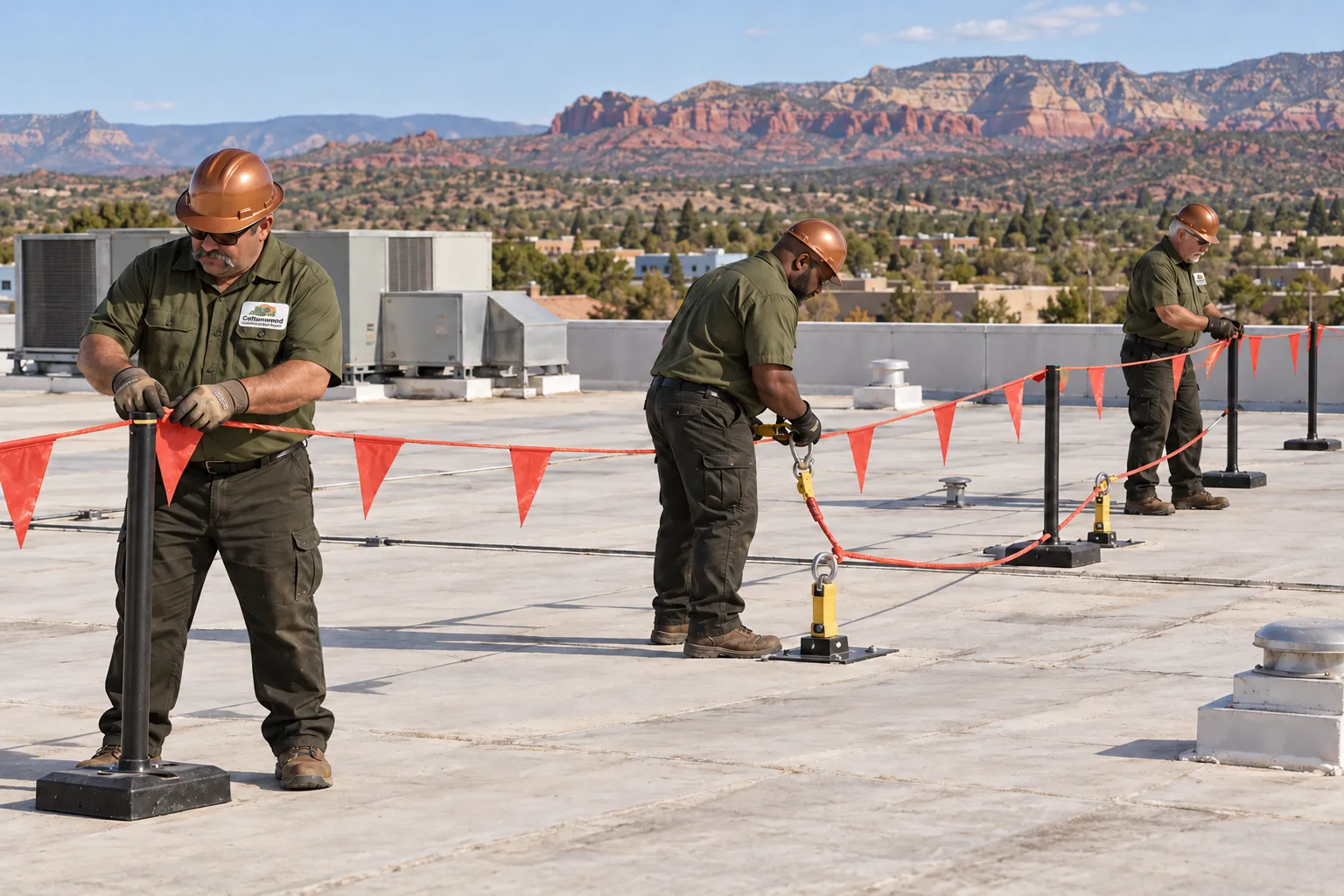
HVAC techs, electricians, and pest-control crews cross the same strip of membrane every visit. Over a few years that path turns gray, thin, and pocked with small punctures from dropped screws and tools.
We patch the worn strip with matching membrane, reseal scuffed laps near the units, and lay walkway pads along the real service path. Permits here run through Yavapai County, so jurisdiction is confirmed by parcel number first.
Damage from people on the roof follows the paths they walk. These are the spots a roofer checks first on a Verde Village building.
A dull stripe of membrane running from the hatch to each rooftop unit.
The top layer has worn through in spots. Patching the thin areas and padding the path stops the wear from reaching the scrim.
Tiny holes or screws pressed into the sheet beside a unit access panel.
Screws dropped during service get stepped into the membrane. Each hole gets cut out and covered with a round-cornered patch.
Scrapes and lifted corners on the flashing around an HVAC curb.
Panels set on the curb and boots braced against it scrape the flashing loose. Resealing the corners keeps water out of the unit base.
Lap edges curling up within a few steps of the roof hatch.
Concentrated weight where people step off the ladder works seams open. Those laps get cleaned, re-welded or re-adhered, and padded.
A ceiling stain inside, directly below a rooftop unit or duct.
Water often enters at a puncture on the service path and runs to the nearest low point. Tracing starts at the worn path above.
Fixing a worn service path early keeps damage small. These are the parts of the building that stay dry when punctures get patched fast.
Water through one pinhole soaks the board under it, so a quick patch keeps the insulation dry.
Sealed curb flashing keeps water out of the duct opening and the unit base.
Finished ceiling tiles below the unit avoid the brown rings that follow a slow drip.
Padding the path spreads foot loads so the rest of the sheet ages at its normal pace.
Dry insulation means the deck under the service path stays free of rust spots.
A roof-access log ties each new puncture to a visit date and the trade that made it.
Walkway pads give techs a marked path away from skylights and the roof edge.
Small patches each year cost far less than replacing a section soaked by months of drips.
Two services cover most foot-traffic damage on Verde Village buildings.
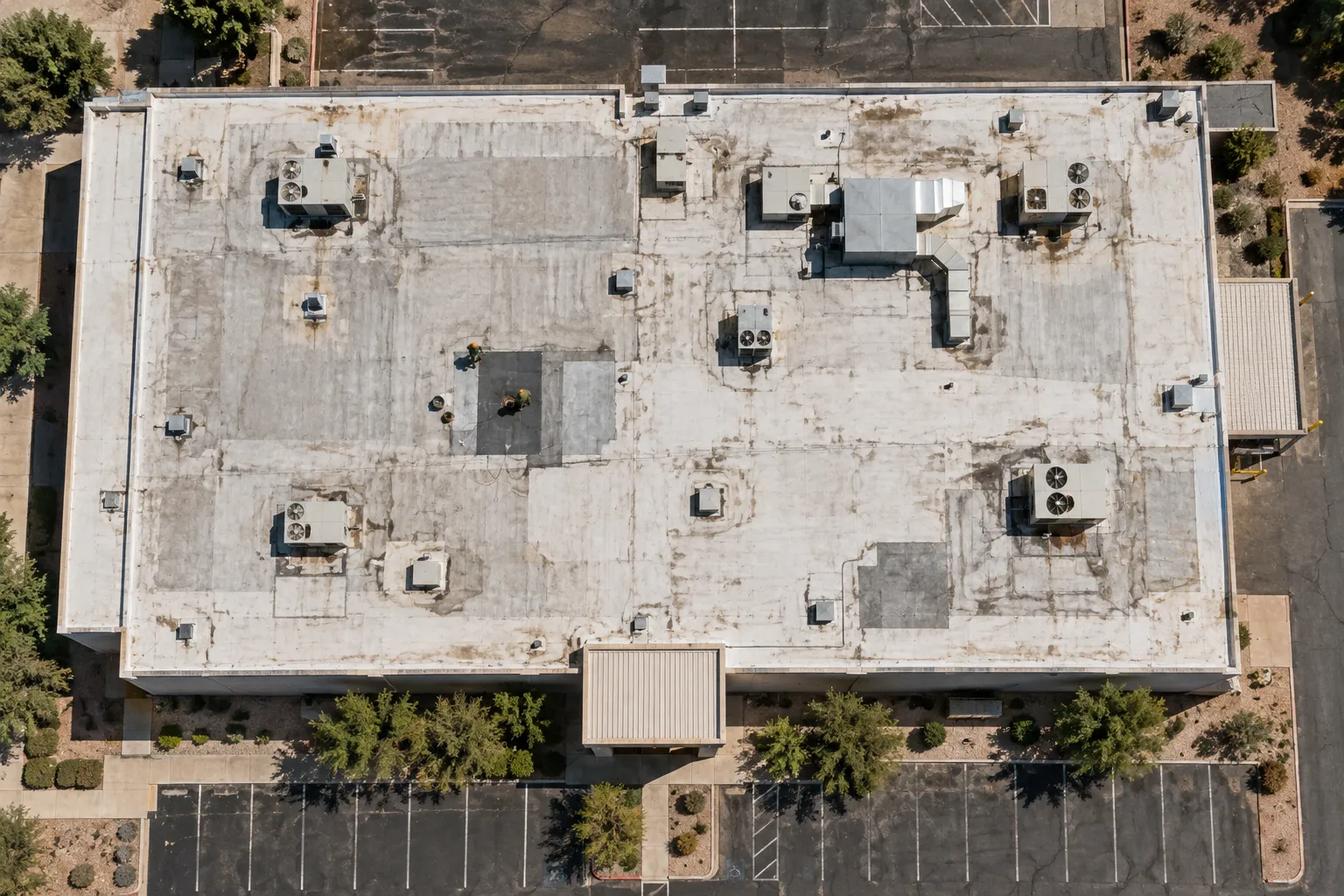
Punctured or thinned membrane along service paths gets cut out and patched with the same sheet type, then padded so the next visit lands on a walkway pad.
Flat roof repair details
A stain below a rooftop unit gets traced from the ceiling back to the puncture, lap, or curb corner where water entered.
Commercial roof leak repair detailsCall and say when the tech was on the roof and which unit they worked on. That narrows the search to the path they walked and the curb they touched.
The path techs walk on the roof and the ceiling below it are checked together, because one usually explains the other.


A roofer walks the hatch-to-unit path slowly, marking pinholes, thin spots, and scuffed curb corners with chalk, and takes moisture readings beside each mark.
Inside, each ceiling stain gets located and compared with the units above it. Recent service dates help point to the visit that caused the damage.
Punctures and worn strips are cut out and covered with matching membrane, with rounded corners so boots cannot catch and peel the patch.
Pads go down along the line techs actually take, from the hatch to every unit, so future foot traffic lands on a sacrificial layer.
A simple sign-in sheet at the hatch records who went on the roof, when, and why. The next puncture then has a date attached.
Verde Village sits beside Cottonwood on the SR 260 side. These neighbors each have their own permit office and roof concerns.
Answers for owners and managers of Verde Village buildings with rooftop units and regular service visits.
Yes, and it is one of the most common causes of small leaks on roofs with several units. Dropped screws, tool bags, kneeling, and panels set on the membrane all leave punctures or scuffs.
The damage collects along the path from the hatch to the units, which makes it easy to find once you know where to look.
Yes. A walkway pad spreads foot loads and takes the scuffing that would otherwise reach the membrane. Pads work best when they follow the path techs actually walk, from the hatch to each unit and around the service side of every curb.
Walk the service path in good light and look for small dark dots, raised bumps, or screws pressed into the sheet. A roofer confirms each one with a probe and a moisture reading, then marks it for a patch.
Two inspections a year catch most problems while they are small: one in spring before monsoon season and one in fall before freezing nights.
Between them, have staff clear drains, scuppers, and gutters, walk the roof after strong wind, keep service techs on walkway pads, and report new ceiling stains. Log the date and photos from each check.
It helps. A sign-in sheet at the hatch with the date, company, and unit worked on turns a new puncture into something you can trace. It also lets you ask the right trade to be more careful next time.
Yavapai County Development Services, since Verde Village is unincorporated even though it sits beside Cottonwood. Confirm the jurisdiction by parcel number before any membrane or flashing work starts, because a Cottonwood mailing address does not always mean city limits.
A patch of matching membrane, welded or adhered and padded afterward, holds as long as the membrane around it. The pad is the key part. Without it, the next round of service visits wears through the patch the same way it wore through the original sheet.
In most cases, yes. Patching and laying pads happen beside the units, and only work right at a curb needs a short shutdown arranged with whoever services the equipment.
Tell us which units get serviced most and where stains appear. A roofer walks the path first and explains what needs patching now.
Leave a name and number and a roofing contractor will call you back about the leak or damage.
Or call now: (928) 436-4827