Chalky, Crazed Membrane
- You See
Fine surface cracks and a white chalk that rubs off on your hand.
- What It Means
The sheet has lost flexibility. A patch bonds to it, but cracks keep forming beside the patch, so the repaired area needs a wider margin.

Oak Creek commercial roof repair on sun-aged membrane: matched patches, a flexibility check on the sheet around them, and an honest read on how long they will last.
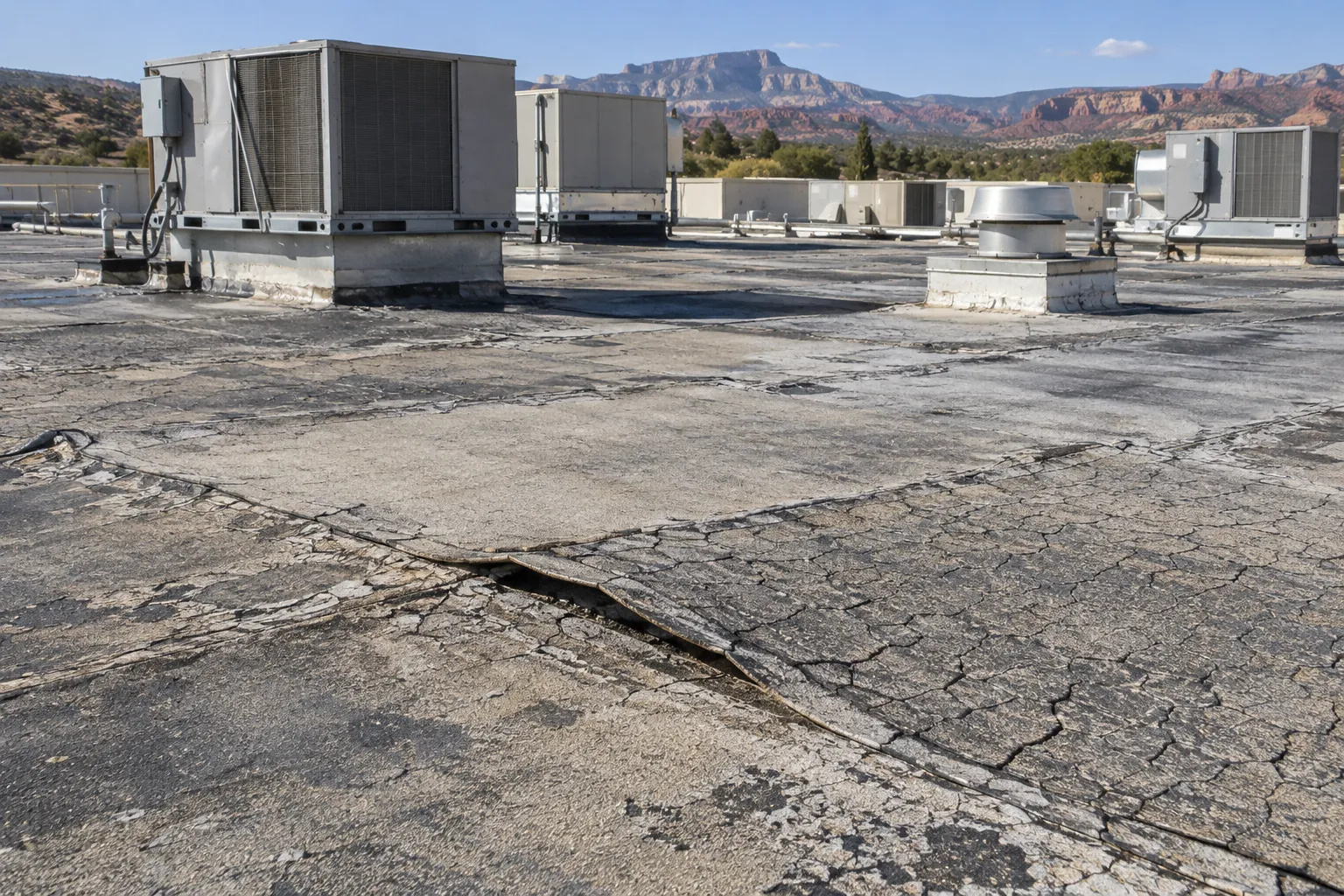
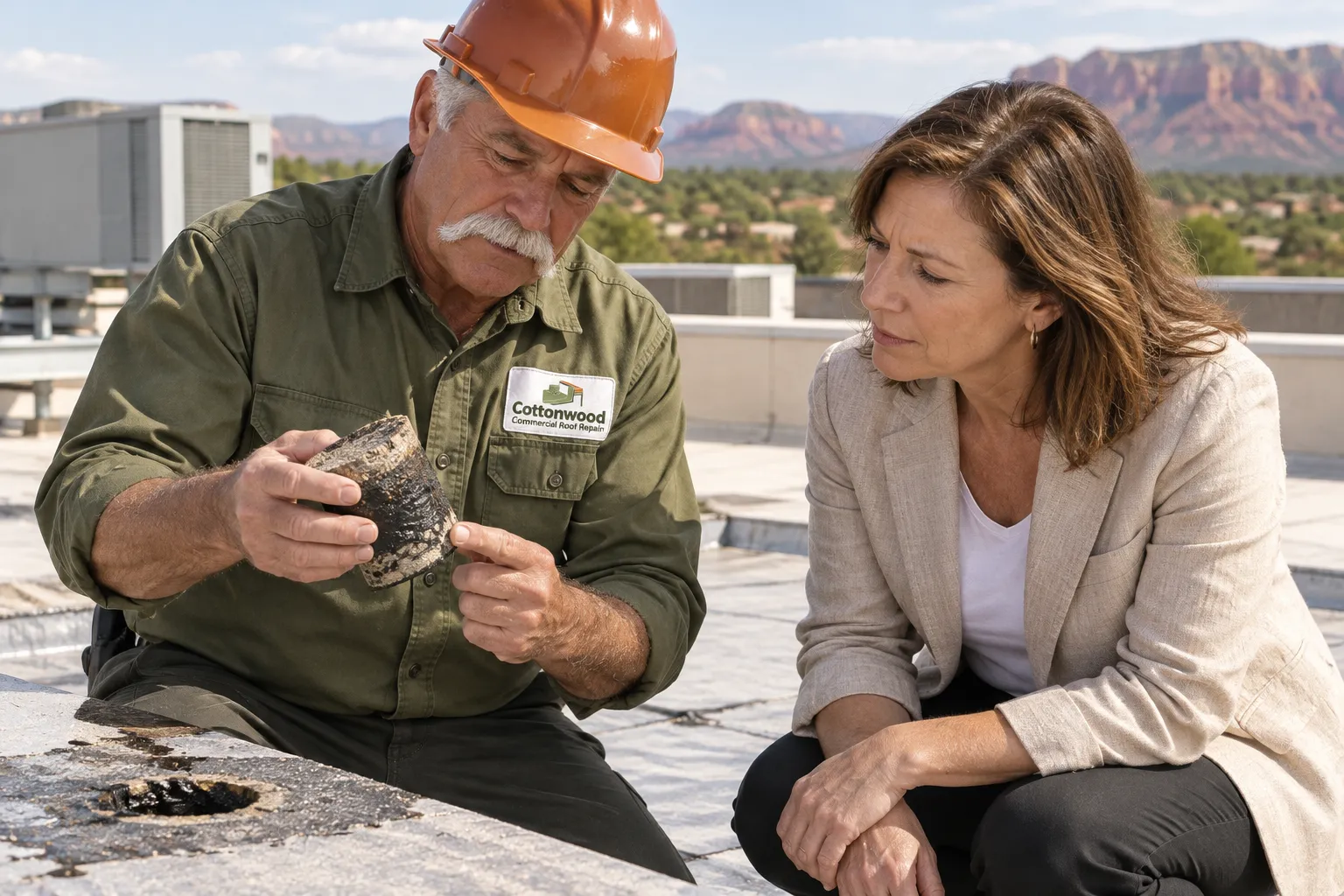
Years of high-desert sun dry out a membrane until it chalks, crazes, and cracks when bent. A new patch bonds well to good material, so the real question on an older roof is the sheet right beside the repair.
We bend-test the membrane, cut a core where it reads wet, and match the patch to the existing system. The Village of Oak Creek sits outside Sedona city limits, so permits run through Yavapai County.
A repair lasts as long as the roof around it lets it. These conditions decide whether a patch on an older Oak Creek roof holds for years or fails early.
Fine surface cracks and a white chalk that rubs off on your hand.
The sheet has lost flexibility. A patch bonds to it, but cracks keep forming beside the patch, so the repaired area needs a wider margin.
A dirt ring that marks where water sat for days after rain.
Standing water keeps working at seams and patch edges. Building up the low spot, or clearing the drain feeding it, protects the repair.
Older patches scuffed through along the line to rooftop units.
Boots wear a patch faster than open field membrane. A walkway pad over the repaired path spreads that load.
A patch lifting at its edges, sometimes a different color than the roof.
Mixing systems at a seam, such as tape meant for EPDM on TPO, lets the bond fail. Matching the existing membrane avoids that.
Membrane that gives slightly when you step near an old repair.
Wet insulation below rots the bond from underneath. That board gets cut out before any new patch goes on.
A well-matched patch on a roof with life left buys real time. These are the parts of the building it keeps dry.
Insulation under a closed seam stays dry and keeps its value.
Membrane with flexibility left keeps its service life when splits get closed early.
Patching now lets you schedule a full roof when budget and weather suit you.
Shop and office ceilings below avoid repeat water rings and replacement tiles.
Dry insulation keeps rust off the deck flutes beneath the repaired area.
Resealed flashing at units keeps water out of the duct openings below.
Dated photos of each patch show whether the sheet around it is still holding.
Cleared drains near patches stop ponding from working at the new edges.
Most sun-aged roofs in the Village of Oak Creek need one of these two services.
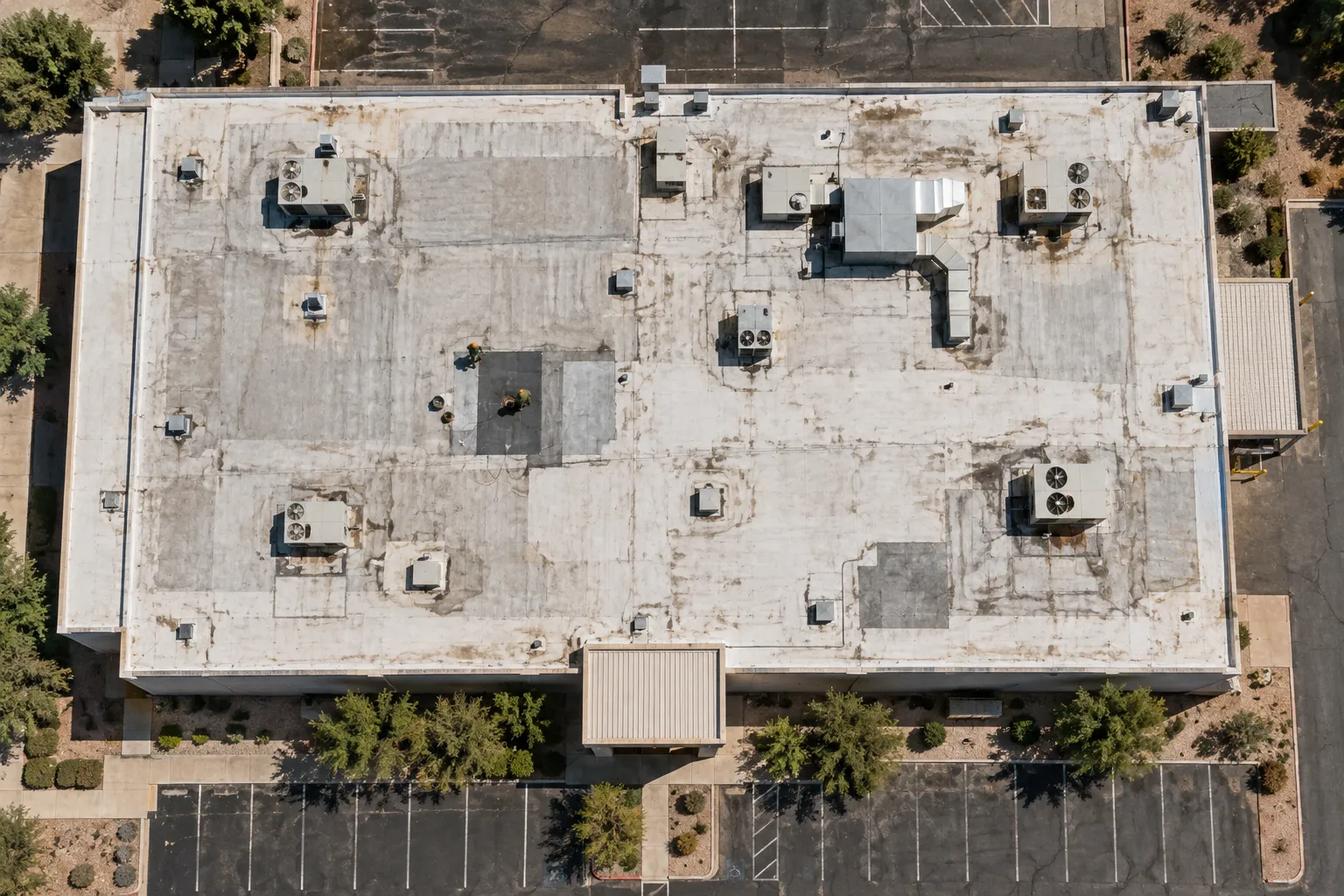
Splits, open laps, and crazed areas on older flat roofs get patched with matching membrane after a bend test shows the sheet around them can hold a bond.
Flat roof repair details
An active drip gets traced to its entry point before patching, since water on an aged roof often travels from a crack several feet upslope.
Commercial roof leak repair detailsCall and describe where the older repairs sit and whether the membrane around them looks chalky or cracked. That tells the roofer what to test first.
On an older roof, the test of the surrounding membrane matters as much as the patch itself.
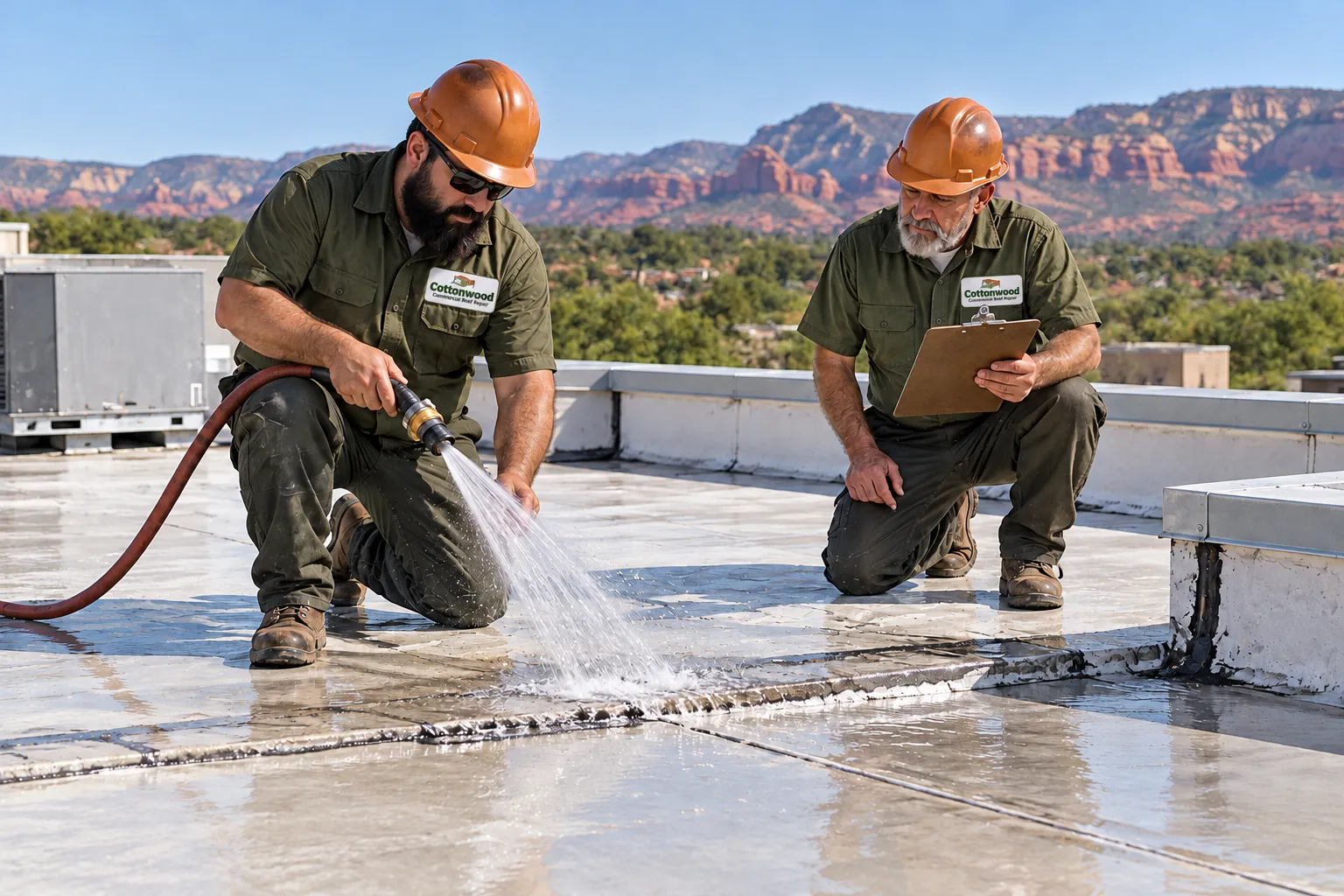
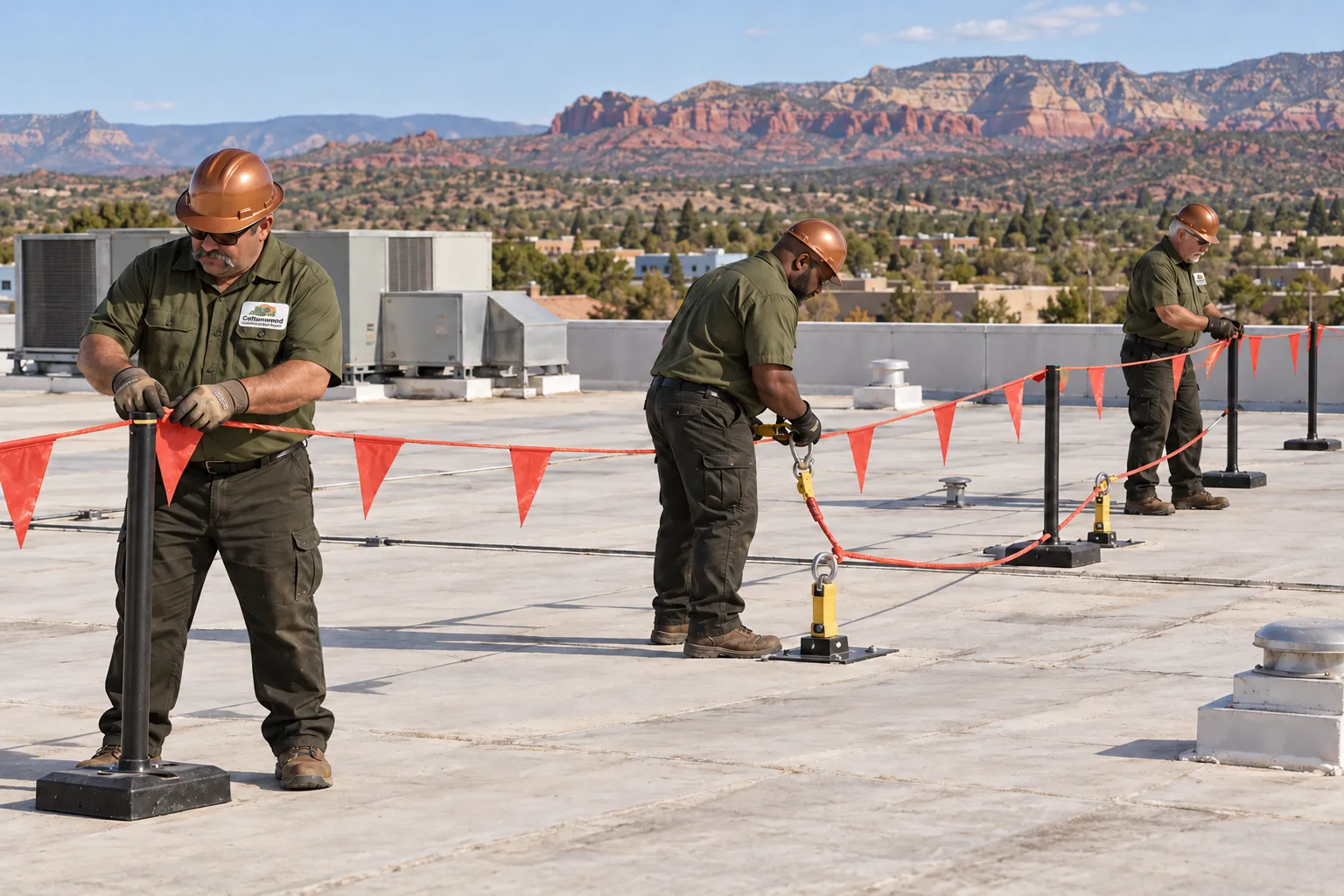
Every split, open lap, and old patch gets photographed, and the membrane next to each one is bent by hand to see whether it flexes or cracks.
Stains and soft ceiling tiles inside are mapped against the roof above. Old stains that stayed dry show which past repairs are still holding.
Where moisture readings run high, a core confirms wet insulation. That board and the membrane over it come out before any patch goes on.
New TPO goes on TPO, EPDM on EPDM, mod-bit on mod-bit, with wider margins where the surrounding sheet is crazed from sun.
Each repair gets a dated photo and a note on the condition of the sheet around it, so the next inspection can judge how the roof is aging.
The Village of Oak Creek sits on SR 179 south of Sedona. These neighbors share the corridor but not the same roof concerns.
Answers about patching older roofs in the Village of Oak Creek.
That depends on the roof around the repair. A new seam weld or flashing on membrane with good years left can last as long as the roof itself, while a patch on brittle, sun-baked sheet fails sooner because the material beside it keeps cracking.
Drainage, foot traffic, and matching the patch to the existing system also decide repair life.
Fold a loose corner or edge piece by hand. If it bends smoothly, a patch has good material to bond to. If it cracks, shows deep crazing, or sheds chalk heavily, patches will hold only briefly and replacement planning makes more sense.
Usually because the patch material did not match the roof, or the surface was not cleaned and primed before it went on. Ponding water and foot traffic at the edges speed up the peel.
Yes, once every seam and split is closed and the insulation below reads dry. A coating over open damage traps water. The coating color still has to suit the property, and Sedona's color rules apply only inside the city.
Yes. Water sitting on a repair works at its edges every storm. Clearing the drain that feeds the low spot, or building the spot up with tapered material, keeps the new patch from sitting under water.
Yavapai County Development Services. The village is unincorporated and sits outside Sedona city limits, so the county handles permits even for addresses that read like Sedona. Confirm by parcel number before work starts.
When repairs would cover more of the roof than they leave, when cores show soaked insulation across large areas, or when the same spot leaks again after several patches. At that point the money is better spent toward replacement.
Tell us the roof type and where past repairs sit. A roofer tests the membrane first and explains what a new patch can expect.
Leave a name and number and a roofing contractor will call you back about the leak or damage.
Or call now: (928) 436-4827