Soft Spots Underfoot
- You See
Membrane that gives or crunches when walked, away from the original leak.
- What It Means
Crushed or soaked boards under the sheet mean water has moved sideways. The soft area outlines the minimum cut.

Camp Verde commercial roof repair sized to the wet area: a spot patch where insulation is dry, a replaced section where water has spread.
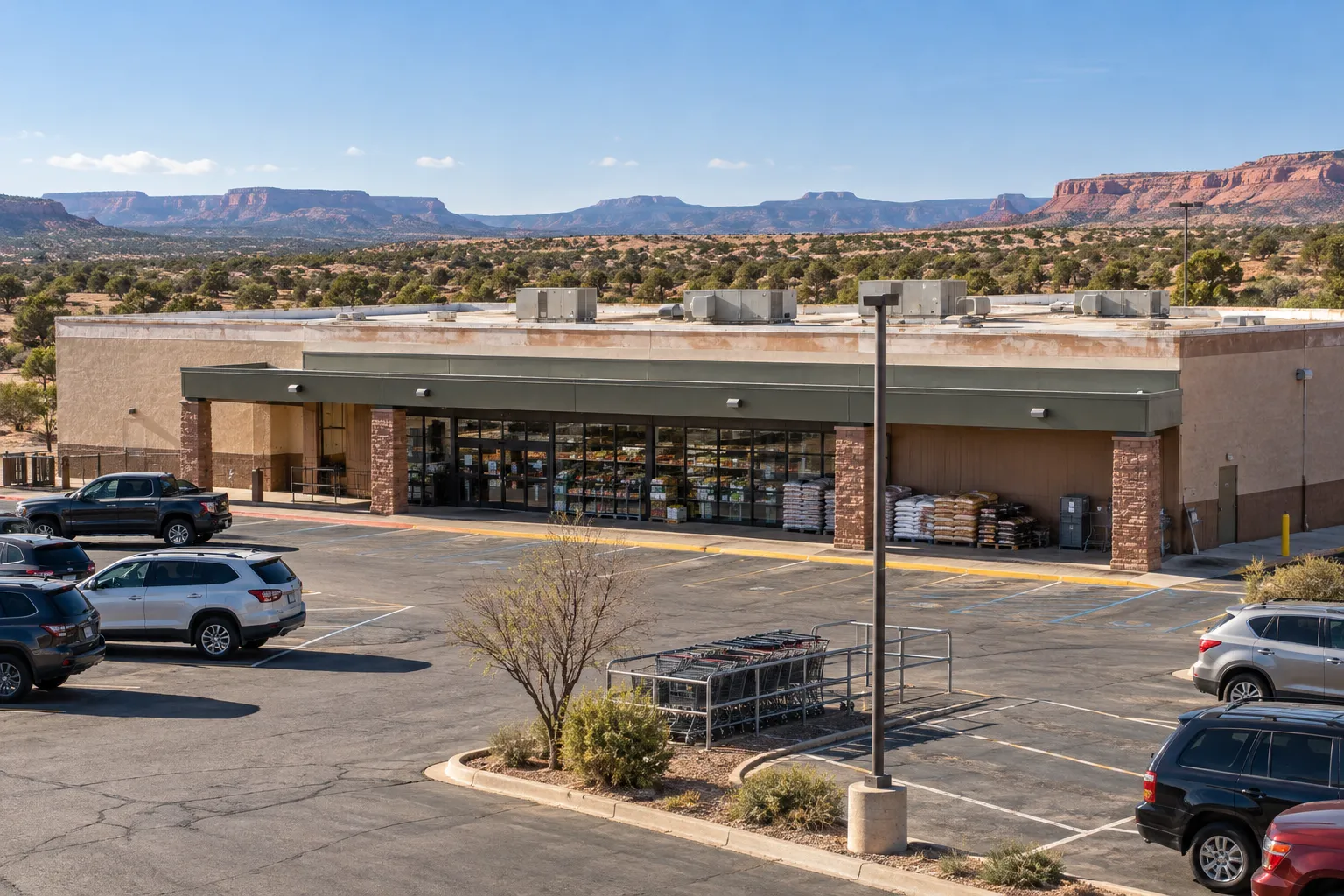

A leak at one seam can wet a few square feet of insulation or a whole bay. Moisture readings around the entry point and a core cut at the edge of the damp area show how far the water traveled before any cutting starts.
Small, dry-edged areas get a spot repair. When wet boards run past a few panels, the repair becomes a replaced section, and Camp Verde limits its like-for-like roofing exemption to one- and two-family homes, so commercial re-roofing work should expect a town permit.
These are the clues that decide between a patch and a section on Camp Verde roofs.
Membrane that gives or crunches when walked, away from the original leak.
Crushed or soaked boards under the sheet mean water has moved sideways. The soft area outlines the minimum cut.
Moisture meter readings climbing well past the leak point.
Wet insulation conducts the meter signal. A grid of readings maps the damp area so the cut line lands on dry boards.
A core cut showing dark, heavy insulation layers under the membrane.
Soaked cores near the edge of the stain mean the repair grows. Dry cores there keep the work to a patch.
Orange staining on the steel deck when a section is opened.
Months of trapped water start rusting the deck. Surface rust gets treated; rusted-through deck turns into a structural repair.
Dirt rings marking where water sits for days after a storm.
A sag under a ponding ring often hides wet boards. Rebuilding the low spot goes with replacing the soaked section.
Sizing the repair correctly keeps the dry parts of the roof in service and stops wet boards from spreading.
Cutting only the soaked insulation keeps every dry board in place.
Removing trapped water early keeps the deck from rusting through.
Tenants below the strip roof stay open while one section is replaced.
A replaced section lets the rest of a healthy roof keep working.
Measured section sizes give the town application an accurate roof description.
Low spots rebuilt with the new section stop holding storm water.
Grid readings saved with the repair show where the roof was wet.
Sections next to rooftop units get fresh curb flashing tied in.
Camp Verde repairs range from a single patch on a retail roof to a replaced section on a larger plant building.
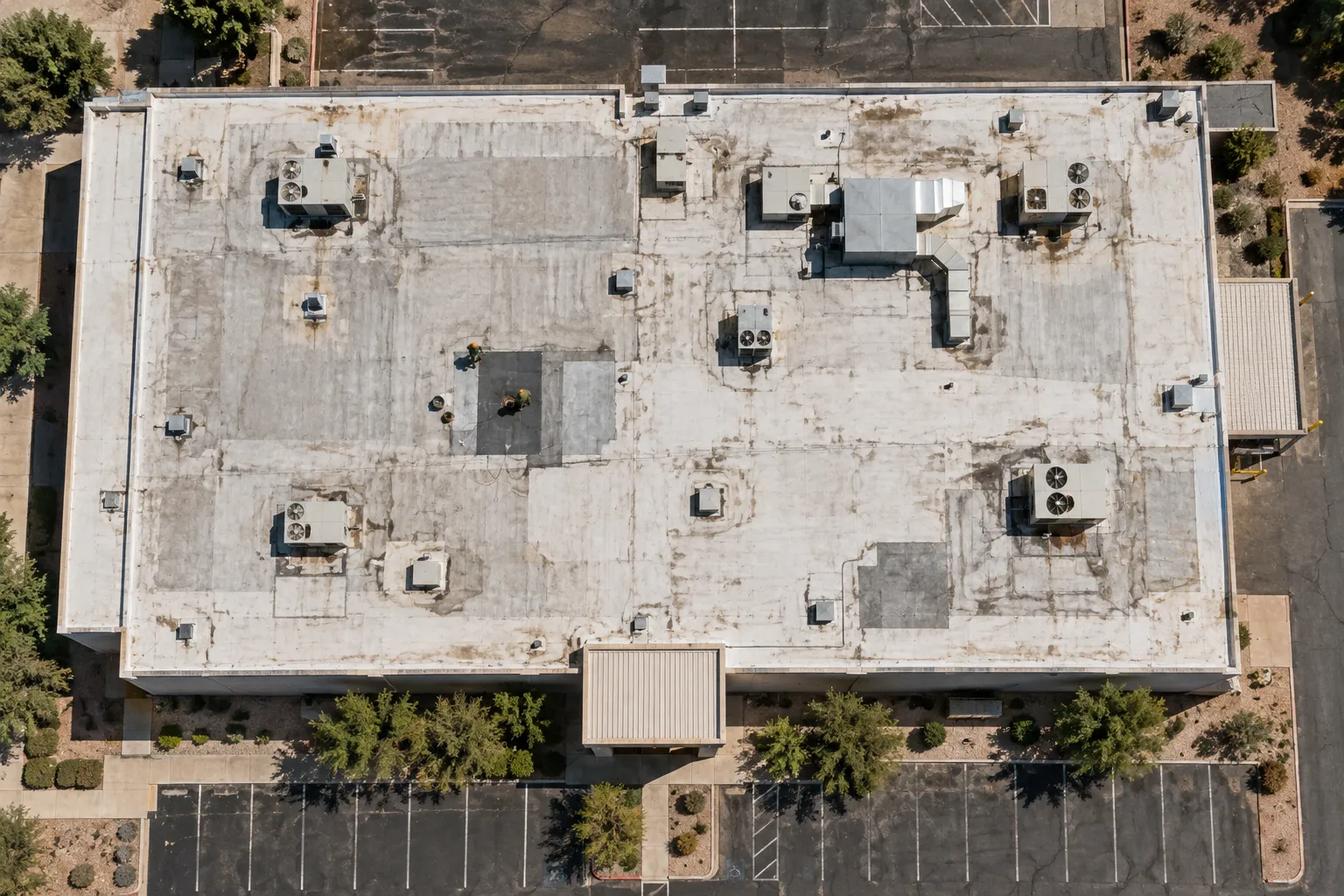
Spot patches and replaced sections on low-slope roofs, with wet insulation cut out and matching membrane welded or adhered back in.
Flat roof repair in detail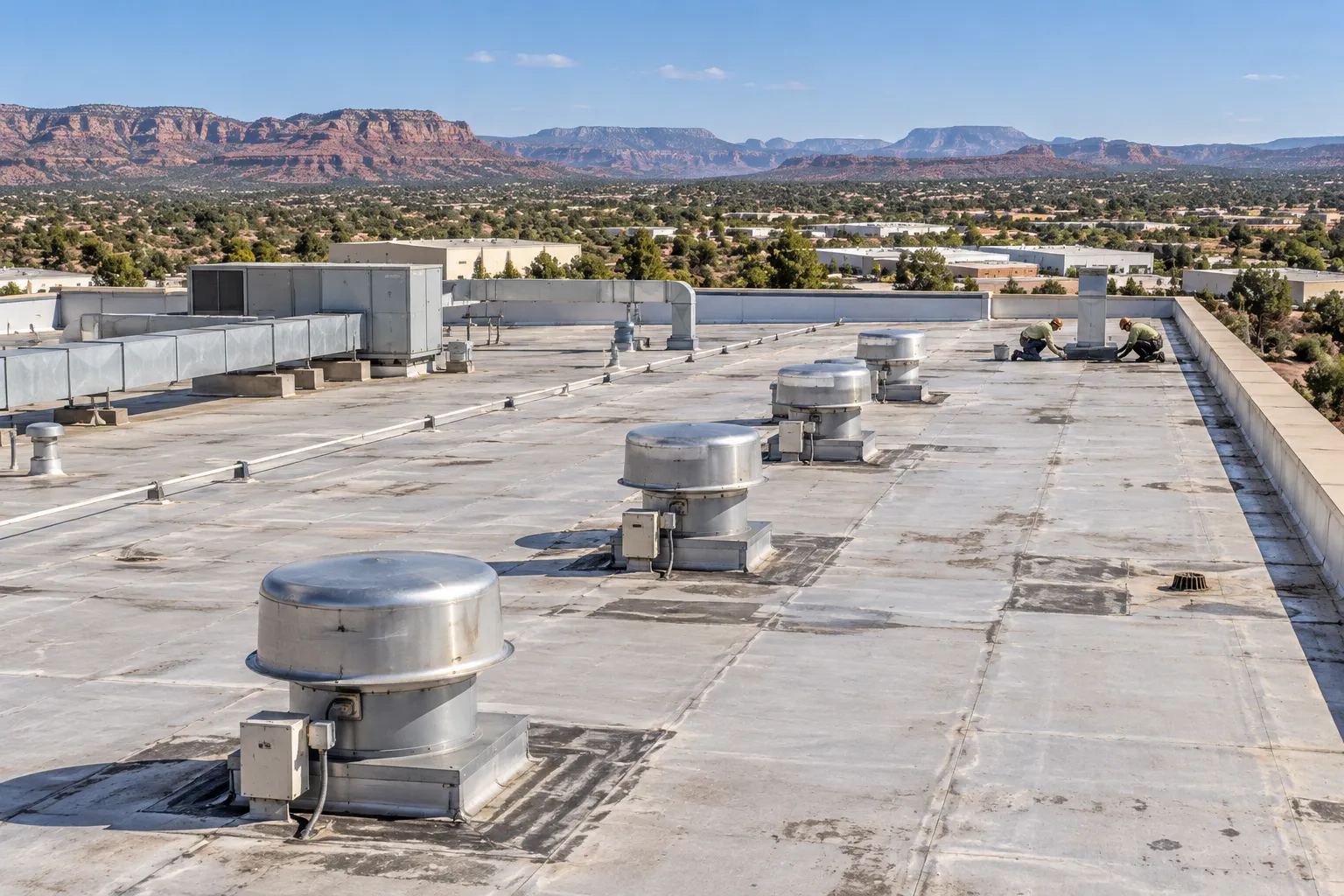
Larger plant roofs where a long leak soaked boards around fans and curbs, repaired one section at a time around production.
Industrial roof repairCall before the next storm adds more water. A roofer maps the wet area with readings and core cuts, then sizes the repair to it.
Each step narrows down how much of the roof is wet, so the cut stops on dry boards.
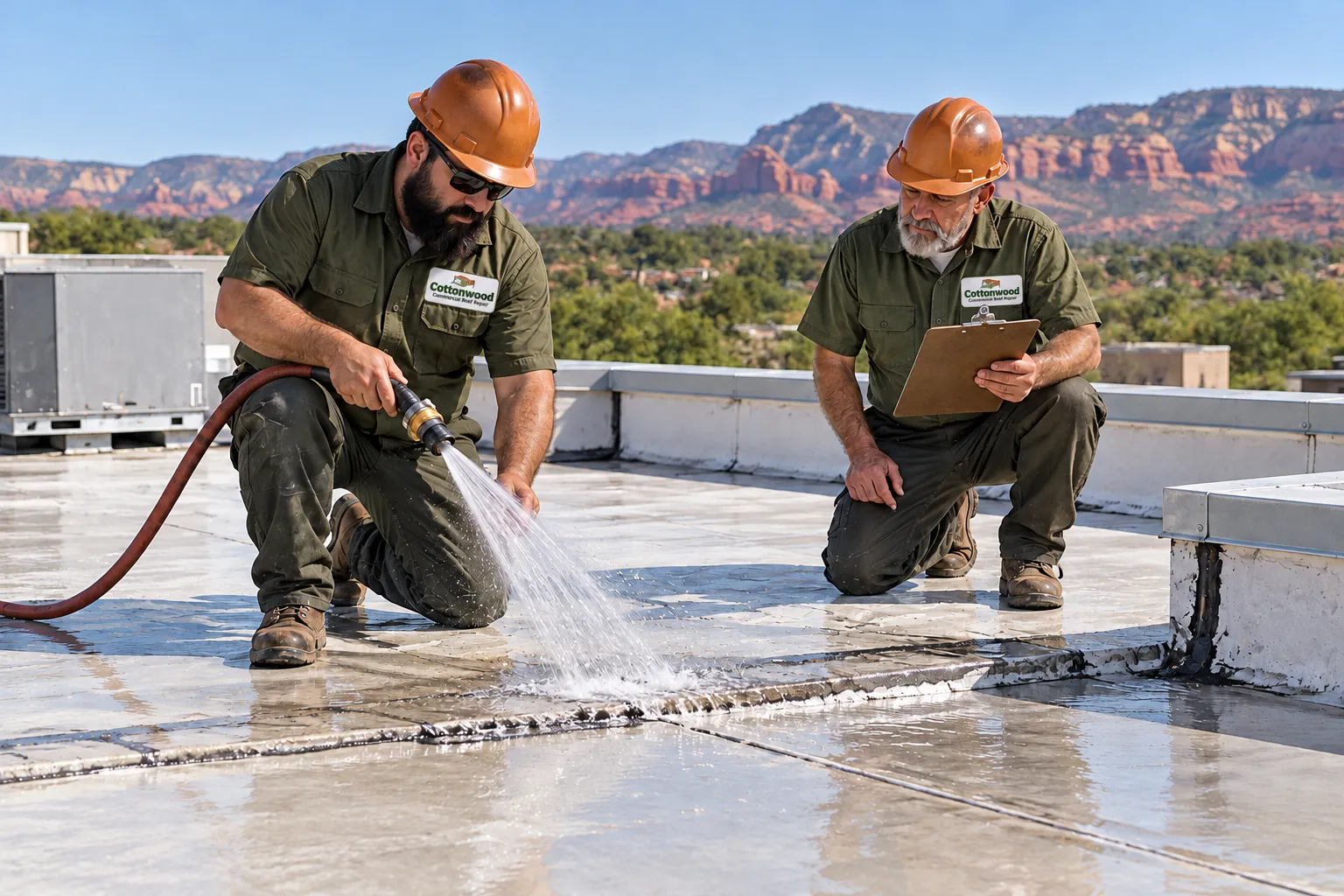
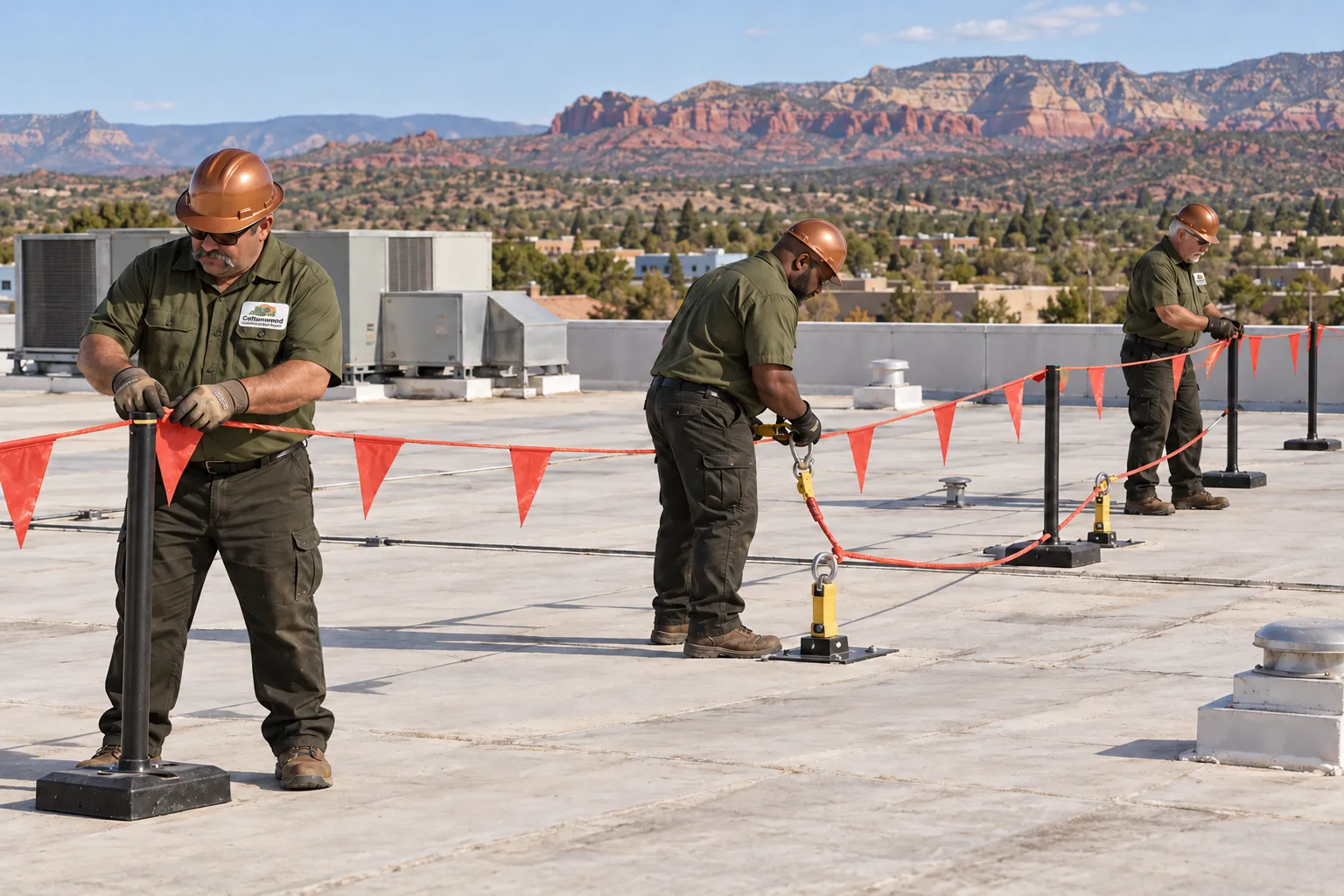
The leak point, nearby seams, curbs, and drains are walked, and soft spots underfoot get marked so the wet area has a first rough outline.
Stains, sagging tiles, and damp stock below are located and dated. Their spread inside hints at how far water moved across the deck above.
Meter readings on a grid and core cuts at the outline show where boards turn dry. Painted marks set the cut line.
Membrane and soaked insulation come out to the marks. New boards, matching membrane, and fresh flashing at nearby curbs close the section.
After the next rain the ceiling under the repaired section is checked again, and dry tiles confirm the cut went far enough.
Camp Verde sits where SR 260 meets I-17, close to several other Verde Valley communities.
Answers for Camp Verde owners deciding how big a roof repair needs to be.
When soaked insulation covers large areas, the steel deck is rusted or sagging, the membrane cracks when folded or blisters across the field, or leaks keep returning after several repairs. Isolated damage over dry insulation still points toward repair, so the moisture map decides.
With a grid of moisture readings and core cuts. Readings drop where boards turn dry, and a core cut at that line confirms it. The cut for the repair then stops on dry insulation.
Because wet boards hold water against the deck, lose their insulating value, and keep feeding the leak after the membrane is patched. Leaving them in place lets the stain come back.
Expect one. Camp Verde limits its like-for-like roofing exemption to one- and two-family homes, so commercial re-roofing of a section goes through the town. A spot patch scope is confirmed with the town before work starts.
In most cases, yes. The work stays on the roof, each opened section is closed before work stops for the day, and plastic goes over stock under the area before cutting begins.
Overlapping the new membrane onto dry existing sheet and welding or adhering every edge, then probing the seams. Edges near curbs and drains get new flashing tied into the section.
After the first heavy rain and again at the next spring or fall roof walk. Ceiling marks below the section are compared with their dated photos.
Tell us where the stain is and how long it has been there. A roofer maps the wet area and explains the repair size.
Leave a name and number and a roofing contractor will call you back about the leak or damage.
Or call now: (928) 436-4827