Under The Curb Flashing
- You See
A drip near a wall or column, nowhere near the rooftop unit.
- What It Means
Water slips under loose curb flashing, then rides the top of the insulation. Resealing the curb base stops it at the source.

Commercial roof leak repair in Cottonwood starts with the stain and ends at the failed seam, pipe boot, or curb flashing that let the water in.
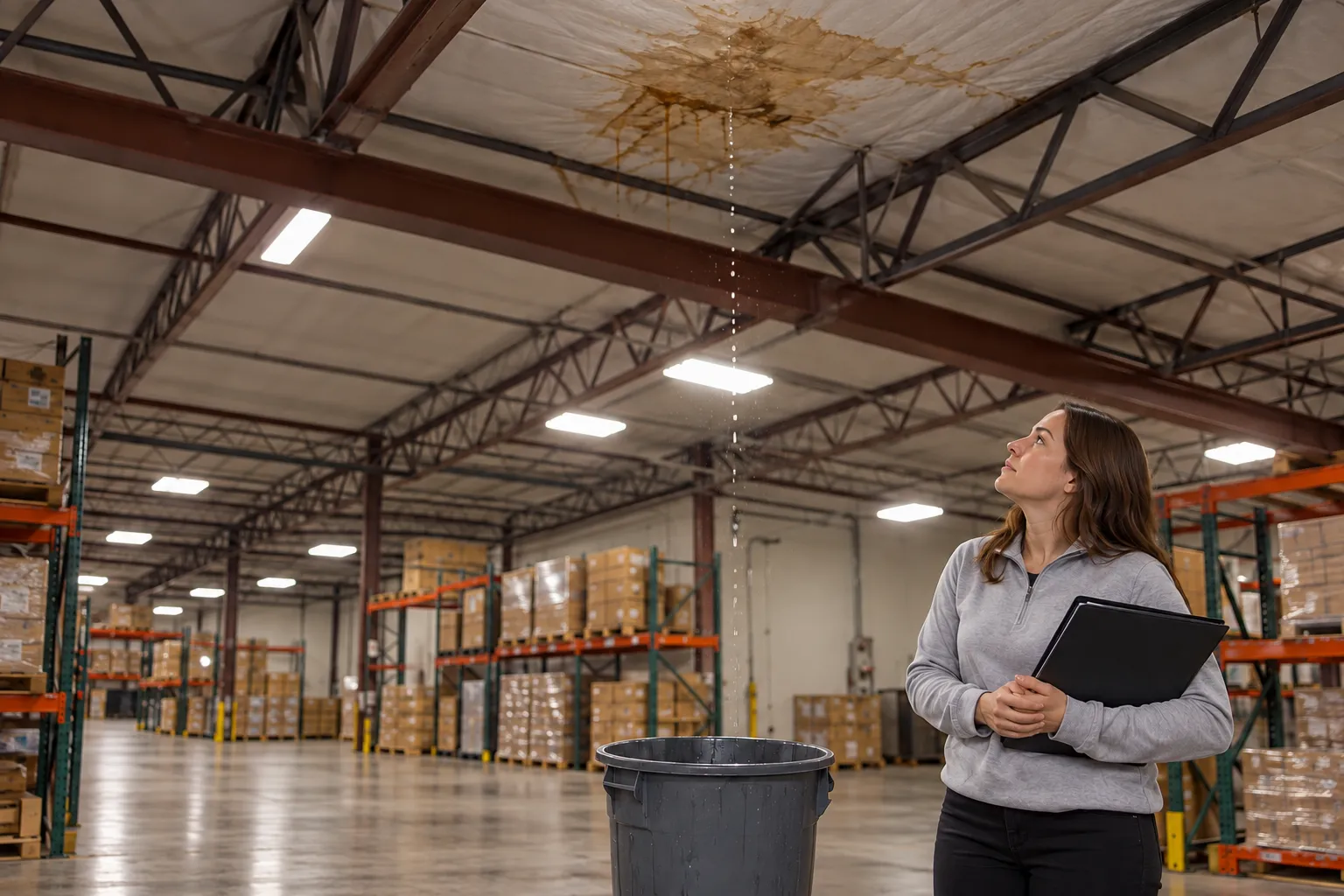
One traced entry point means a focused repair. Leaks that keep moving tell a different story about the roof.
Water rarely drips straight down from where it enters a commercial roof. These are the paths it takes before it reaches a ceiling.
A drip near a wall or column, nowhere near the rooftop unit.
Water slips under loose curb flashing, then rides the top of the insulation. Resealing the curb base stops it at the source.
A line of stains running parallel to the steel deck ribs.
Steel deck flutes act like gutters that carry water several feet. Tracing follows the flute uphill to the open seam above it.
Drips on a metal building that land a bay or two from the bad screw.
On metal roofs, water runs along a purlin before it falls. The fix is at the fastener or lap where it started.
Rings on the ceiling around plumbing vents or a dry stain that returns with rain.
Cracked boot collars and dried pitch pans leak around the pipe. A new boot or refilled pan closes the opening.
Leaks that appear only when storms blow from one direction.
Monsoon wind drives rain into laps and under edge metal that stay dry in calm weather. The upwind edge gets checked first.
Leak work happens in two layers: a stopgap to slow the water, then the permanent repair at the entry point.
| Repair | What It Fixes | When It Is Enough |
|---|---|---|
| Seam tape or sealant | A split lap during rainy weather | As a stopgap until the lap can be re-welded |
| Weighted tarp | A torn membrane section after a storm | Until the permanent patch is scheduled |
| Seam or flashing repair | The failed detail at the true entry point | When the insulation below stays dry |
| Wet insulation cutout | Soaked board that keeps feeding the drip | When the wet area stays local to the leak |
Every week a roof leak runs, it reaches further into the building. Fixing the entry point protects these.
Tiles and grid near the leak stop staining and sagging.
Stock on racks below the drip stays boxed and dry.
Dry board under the membrane keeps its value and its shape.
The deck under a seam avoids rust from water sitting in the flutes.
Lights, panels, and ducts under the roof stay clear of drips.
Concrete and tile walkways under the leak lose the wet spots that cause slips.
Photos of the traced entry point show exactly which roof detail got fixed.
Staff spend less time moving buckets and plastic sheeting under the roof.
Call with where the stain is, when it started, and whether it drips during light or heavy rain. A stopgap can hold until the entry point is repaired.
Leak work moves back and forth between the ceiling and the roof until the entry point is confirmed.
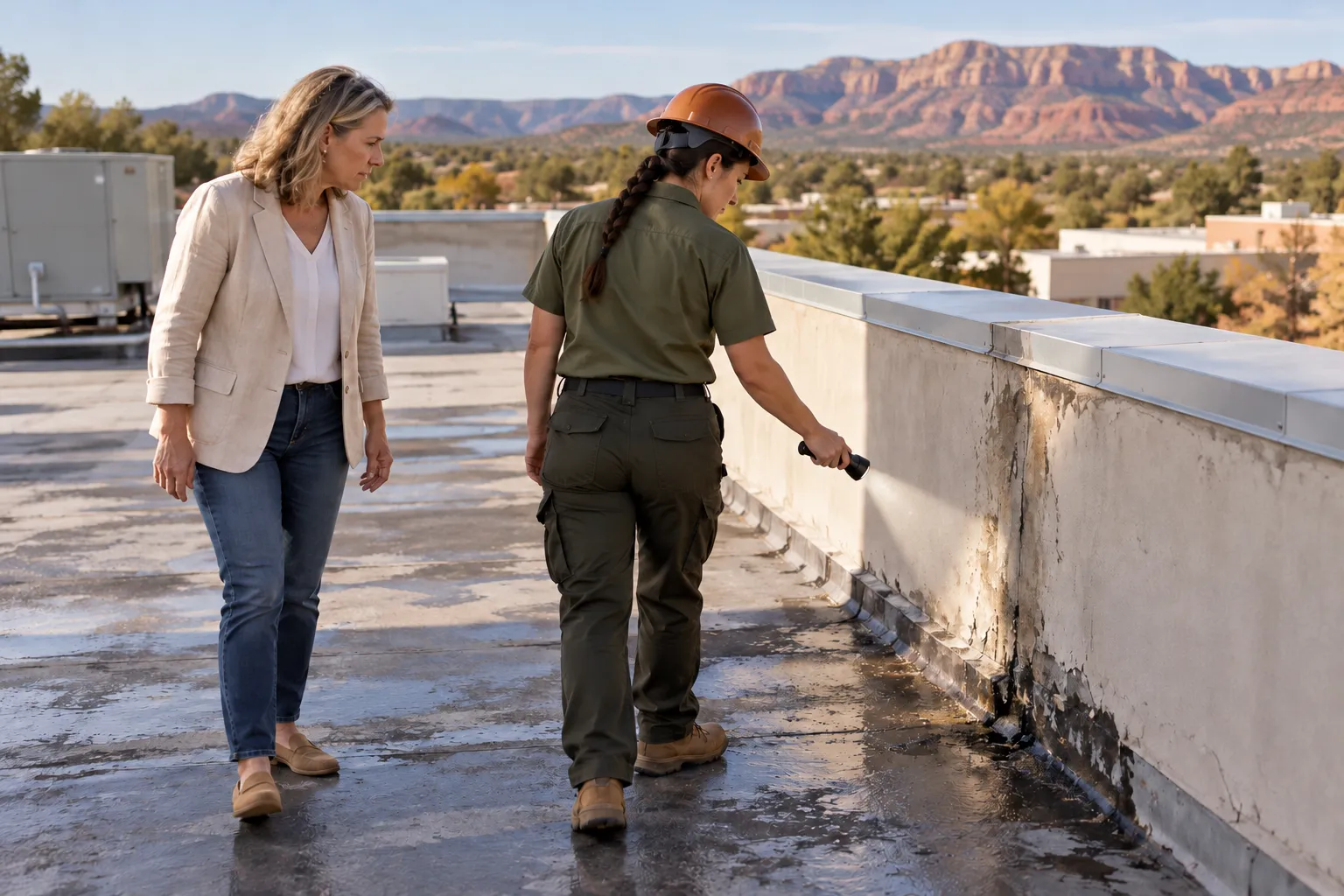

A roofer walks the area upslope of the stain, checking every seam, boot, curb, and drain within reach. Meter readings show where water sits under the membrane.
Inside, the stain, drip point, and any wet ceiling grid get measured from a wall or column. That fix point lets the roofer line up the search above.
A controlled water test runs on one small seam or curb while someone watches below. Each detail is tested alone so the true entry point stands out.
The failed seam gets re-welded or re-adhered, the boot or curb flashing is replaced, and soaked insulation under it comes out before the patch goes down.
After the next real rain, the old stain and drip point get a second look. A dry ceiling grid confirms the trace found the right detail.
Once the entry point is found, the repair itself often falls under one of these.
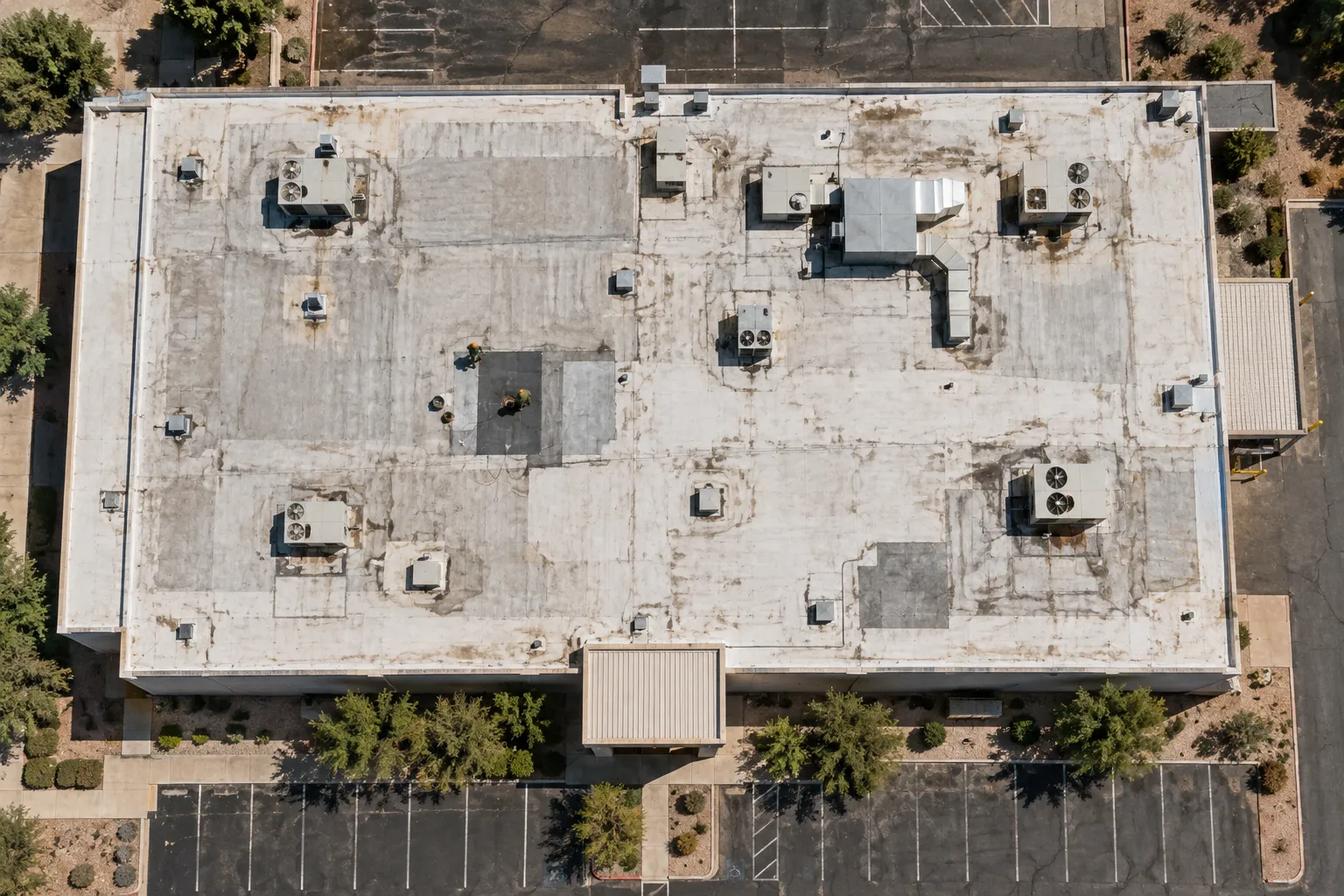
Most traced leaks on low-slope buildings end at a lap, curb, or drain on the membrane, which flat roof repair closes with matching material.
Flat roof repair for seams and drains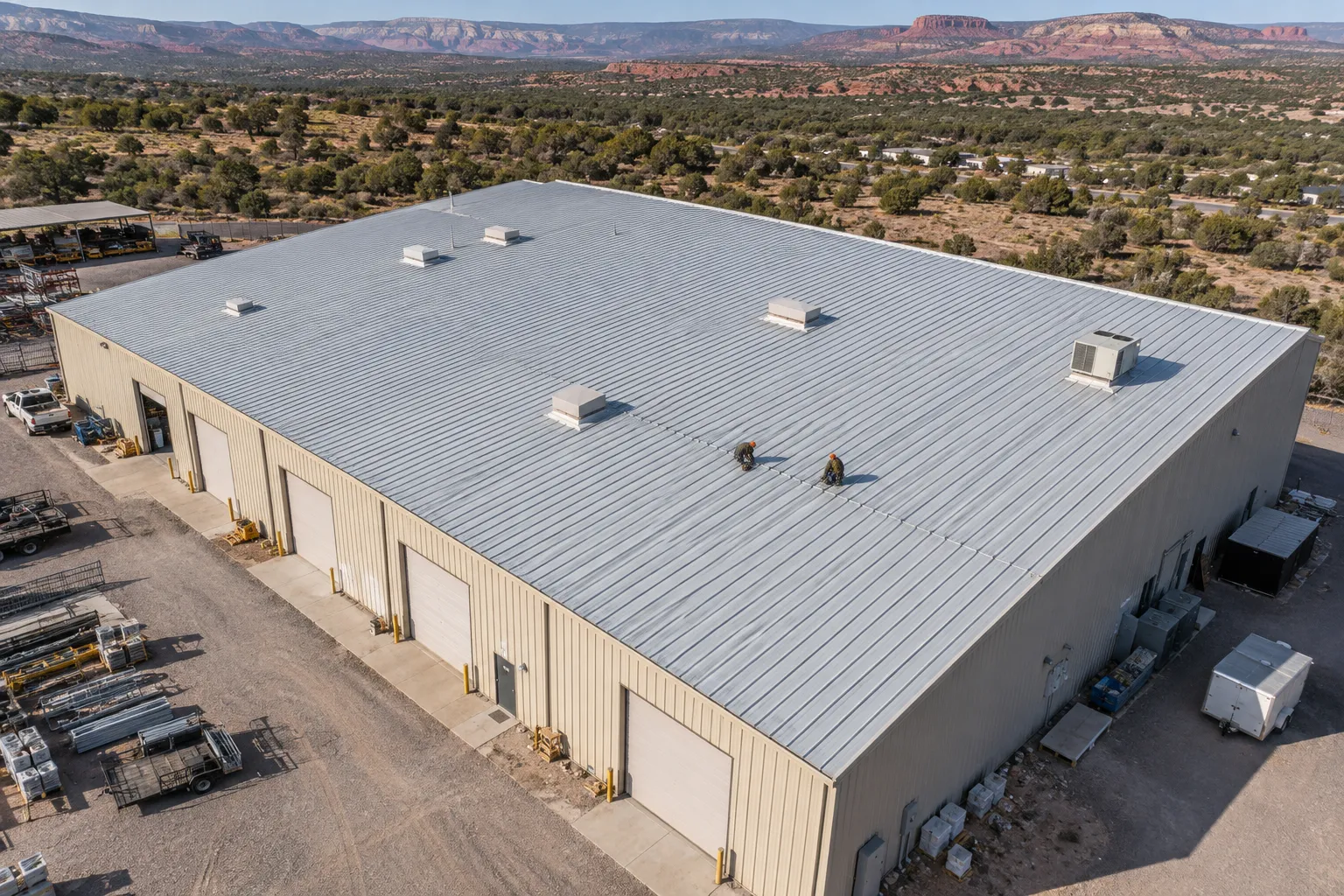
On steel buildings the trace usually ends at loose fasteners, an open end lap, or a skylight edge, all handled by metal roof repair.
Metal roof repair for fasteners and lapsWhat building owners and facility managers ask when water shows up inside.
Because water moves before it comes through. It slides under curb flashing, runs along deck flutes or a purlin, and drops through a ceiling tile several bays from where it entered.
Tracing begins at the stain and moves upslope, checking the closest seams, drains, and penetrations. Meter readings and a water test on one small area at a time pin down the entry point.
Wind direction and rain volume decide which details get tested. A lap facing the storm, a slow drain that lets water rise, or edge metal lifted by gusts can stay dry for months and leak during one hard monsoon storm.
They find wet insulation, which narrows the search. Readings show where water has spread under the membrane, and the entry point is usually at the uphill edge of that wet area. A water test on one detail then confirms it.
Only until the permanent repair can be made, ideally before the next monsoon storm. Seam tape and weighted tarps slow water during bad weather, and each one gets logged so the permanent seam or flashing repair replaces it.
Soaked board directly under the leak does, because it holds water against the deck and feeds new stains. Insulation that reads dry a few feet away stays in place, and the cutout gets patched with matching membrane.
Move stock and equipment out of the drip zone, cover what cannot move with plastic sheeting, and set buckets on the floor. Photograph the stain with the date and note whether it drips in light or heavy rain.
Wait until the roof repair has been through a rain. A dry stain after the next storm confirms the entry point was found, and new tiles then go in without the risk of a second ring.
Tell us where the stain is and when it drips. A roofer traces it to the failed detail and explains the repair before work starts.
Leave a name and number and a roofing contractor will call you back about the leak or damage.
Or call now: (928) 436-4827