
West And Uphill On SR 89A

Jerome Commercial Roof Repair

Jerome commercial roof repair where older masonry walls meet the roof: counterflashing, parapet caps, and base flashing repaired in materials that match.

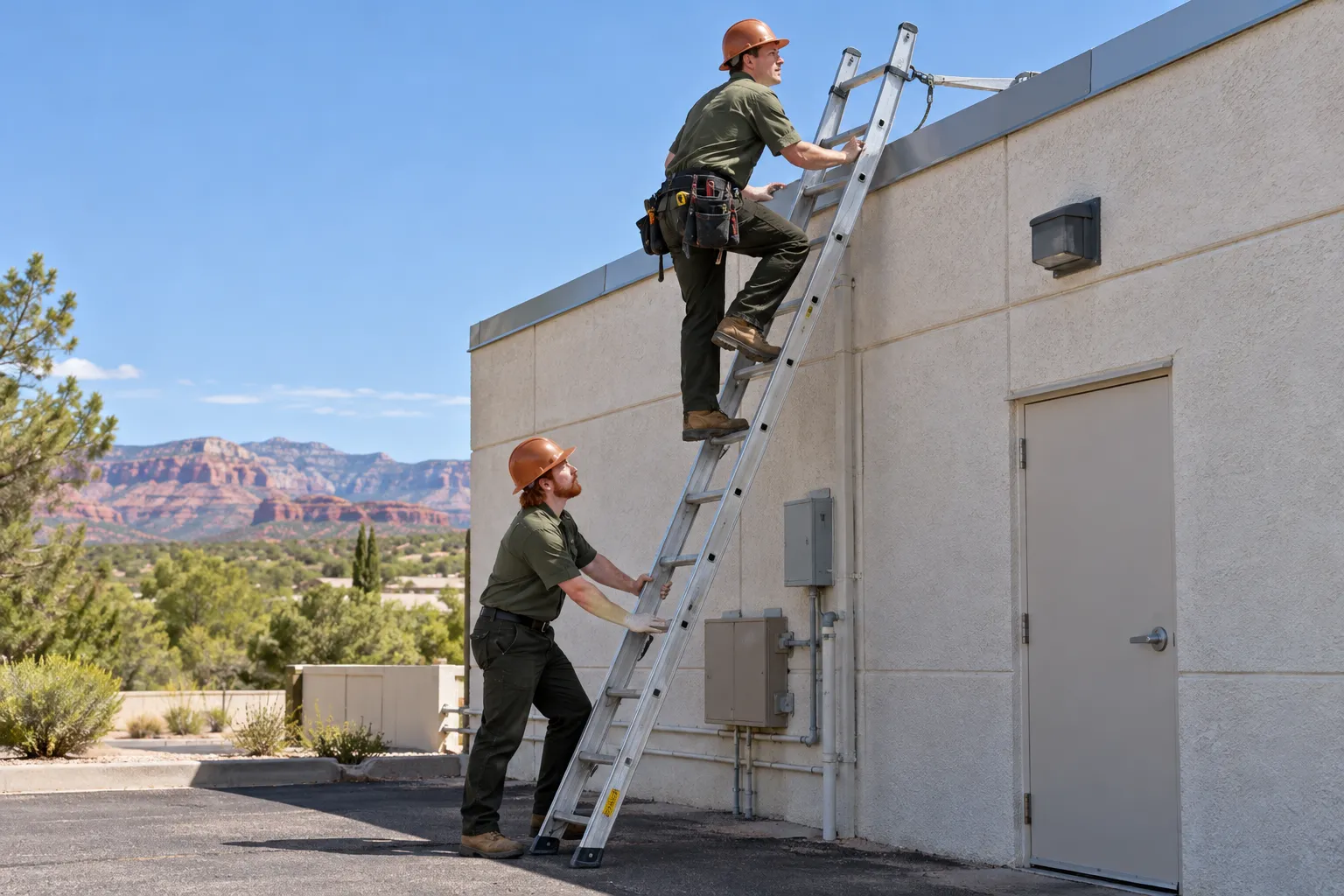
Roofer climbing a tied-off ladder to a parapet wall while a second roofer steadies it in Jerome, AZ

Jerome Commercial Roof Repair At The Wall Line

Roofer showing a property owner inspection photos on a tablet beside a work truck

On older masonry buildings, most leaks start where the roof turns up a wall. Counterflashing tucked into mortar joints works loose, parapet caps open at their joints, and base flashing pulls away as the wall and roof move differently.

The owner FAQ notes that all of Jerome is a National Historic Landmark district, and the Town's Design Review Board reviews exterior changes with a paint and roofing form. Repairs use matching materials and muted colors, and steep streets keep material deliveries small.

  • Counterflashing reset into mortar joints
  • Parapet cap joints resealed or caps replaced in kind
  • Base flashing re-adhered where it meets the wall
  • Material colors confirmed before design review

Where Walls Let Water In

Wall-to-roof joints on Jerome buildings fail in a few repeat ways.

Mortar Wear

Counterflashing Pulled From The Joint

You See

A metal strip standing away from the brick with an open mortar line behind it.

What It Means

Water runs down the wall face and behind the base flashing. Resetting the strip into a cleaned, repointed joint closes that path.
Weather

Open Parapet Cap Joints

You See

Gaps or failed sealant between cap sections along the top of the wall.

What It Means

Rain enters the wall core and comes out inside or under the roof edge. Joint covers or new caps in a matching finish stop it.

Movement

Base Flashing Pulling Away

You See

Membrane at the foot of a wall sagging or peeling off the masonry.

What It Means

Wall and roof move at different rates. Re-adhering or replacing the base flashing, then tucking the counterflashing over it, rebuilds the seal.

Interior

Stains High On Inside Walls

You See

Damp or crumbling plaster near the ceiling along an exterior wall.

What It Means

Water entering at the parapet usually shows on the wall before the ceiling. That points the inspection at the cap and counterflashing.

Debris

Scuppers Through Thick Walls

You See

Water backing up at a narrow scupper cut through the parapet.

What It Means

Long scupper openings clog and overflow onto the wall flashing. Clearing them and resealing the liner keeps water moving off the roof.

What A Repair Protects In Jerome

Closing the wall line protects old masonry and the rooms behind it.

Masonry Walls

Dry wall cores hold their mortar longer than walls fed by an open parapet cap.

Plaster Finishes

Interior plaster near the ceiling stays intact once wall leaks stop.

Parapet Caps

Sealed cap joints keep rain out of the top of the wall.

Design Review

Matching materials and colors keep the repair in line with the paint and roofing form.

Roof Insulation

Water stopped at the wall line never reaches the boards under the membrane.

Scupper Openings

Clear scuppers stop overflow from soaking the wall flashing.

Small Deliveries

Planned flashing and membrane lists suit steep streets with little room to stage.

Repair Photos

Dated photos of each flashing detail document the work for the town record.

Repair Choices For Jerome Roofs

Jerome repairs mix low-slope membrane work at wall bases with metal caps and flashing at the top of the wall.

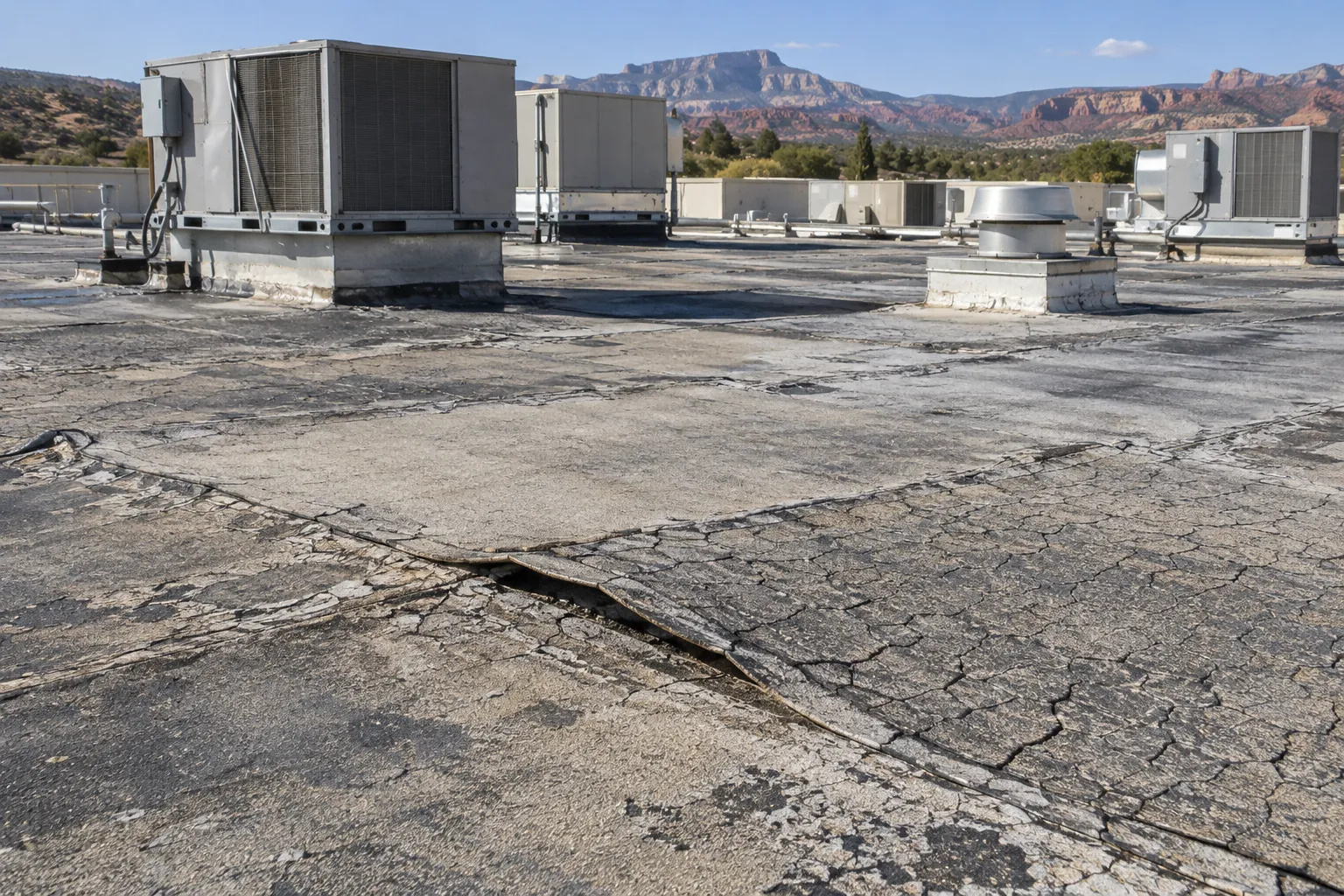
Aged, cracked flat roof membrane with an open split near rooftop units

Flat Roof Repair

Base flashing, open laps, and patches on low-slope roofs behind parapets, in membrane that matches the existing sheet.

Flat roof repair details
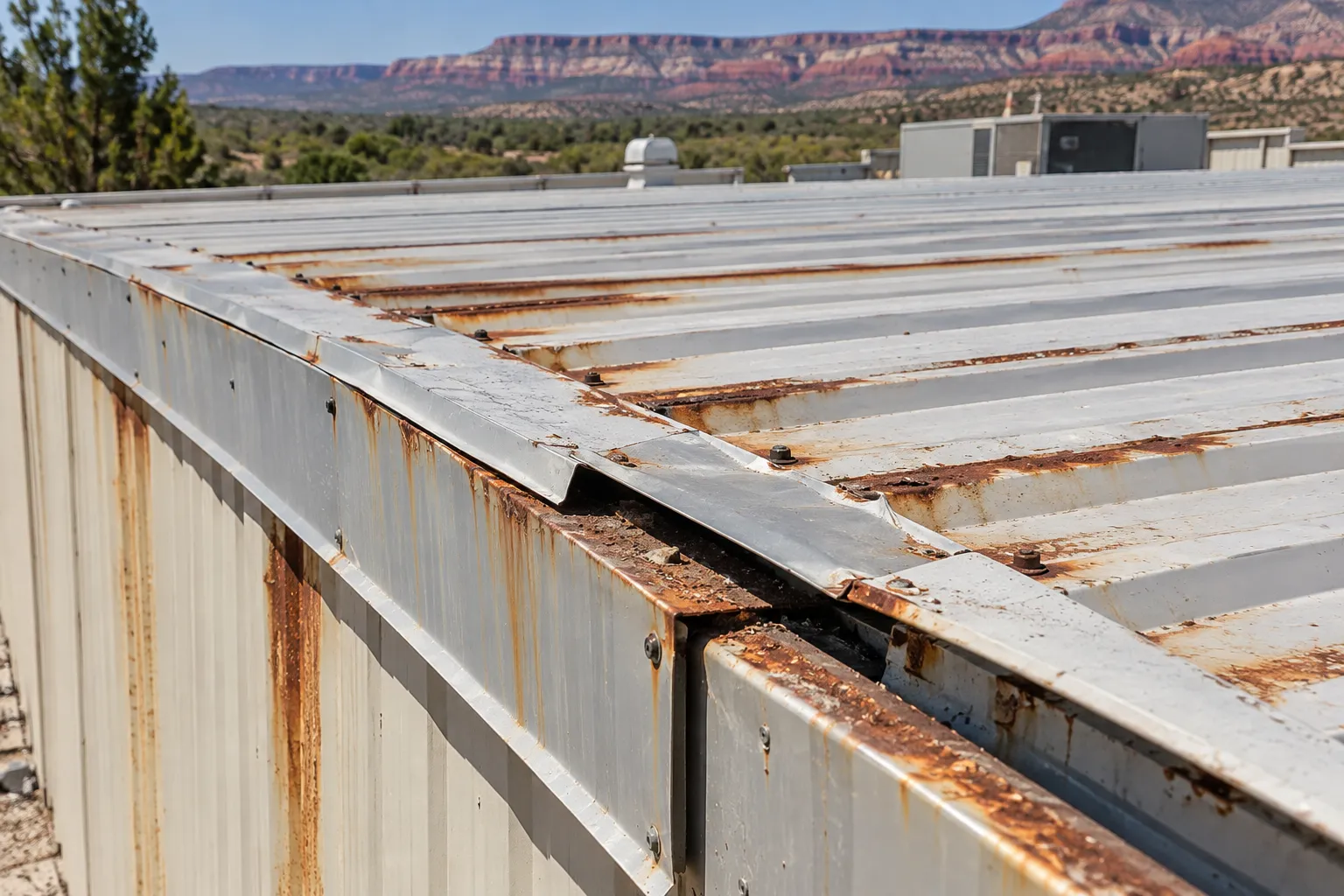
Rusted metal panel lap and a separated ridge cap at an eave

Commercial Metal Roof Repair

Parapet caps, counterflashing, and metal roof sections repaired or replaced in a finish that matches the building.

Commercial metal roof repair

Stain Creeping Down An Inside Wall?

Call and describe which wall shows water and how high. A roofer checks the parapet cap and counterflashing above that spot first.

How Wall Line Repairs Proceed

Work follows the water from the inside stain back to the joint in the masonry.

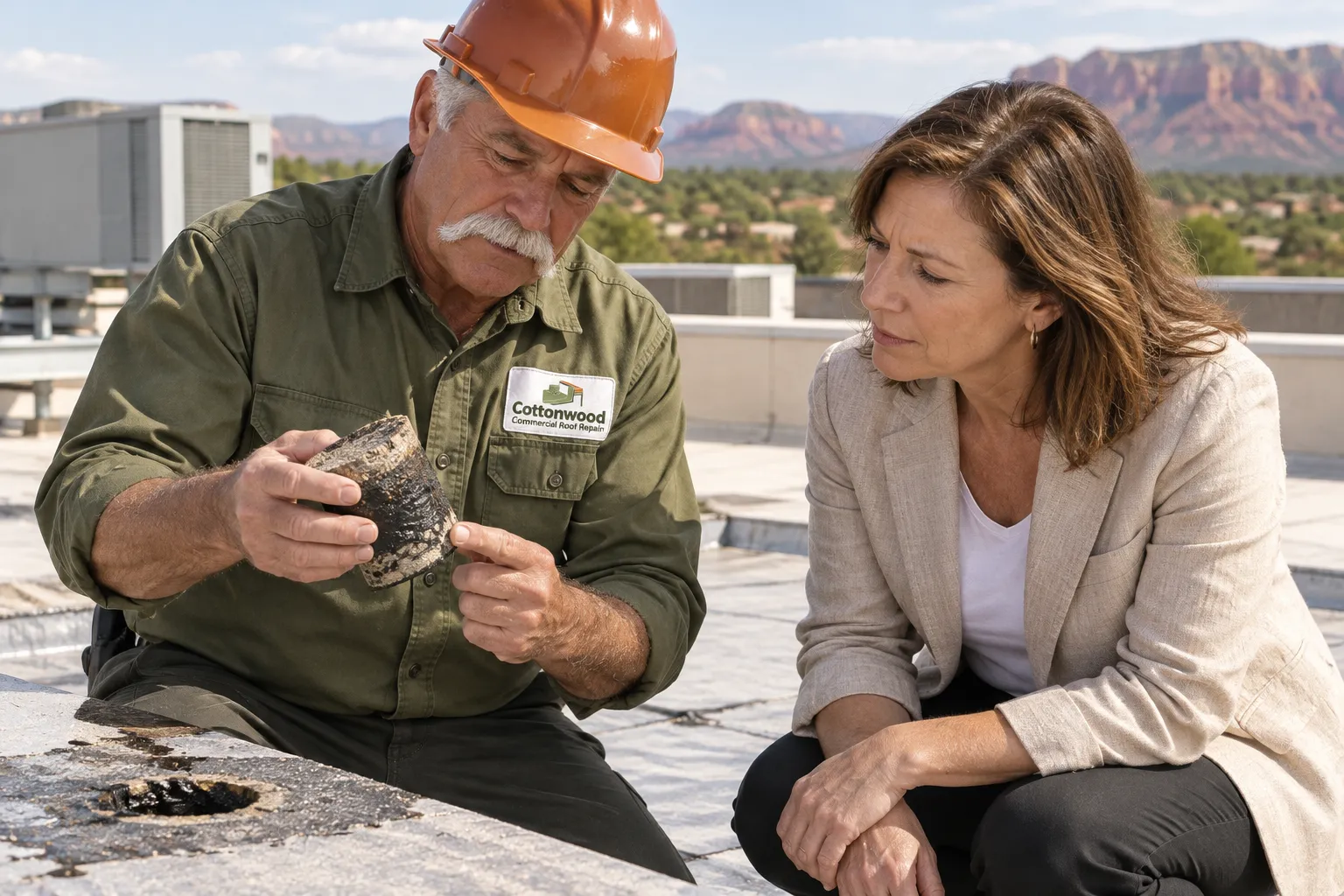
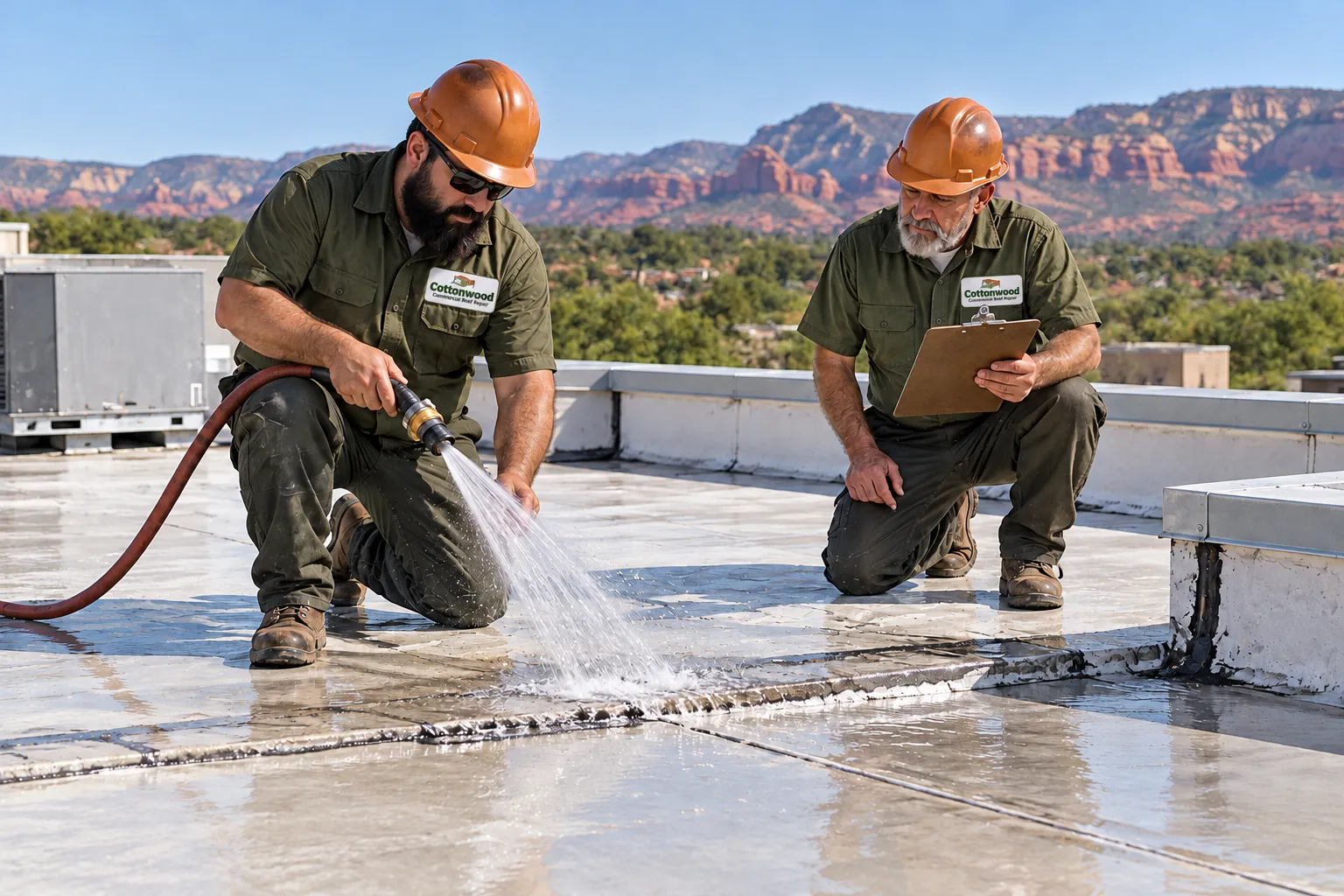
Roofer holding a core sample cut from a flat roof beside a property managerTwo roofers water-testing a single seam with a hose
On The Roof
Around The Building
On The Roof

Step 1: Inspect Your Roof

Parapet caps, mortar joints, counterflashing, base flashing, and scuppers along every wall get a close look and photos before materials are chosen.

Around The Building

Step 2: Read The Wall Stains

Damp plaster and stains inside are measured from the ceiling and the corner, which tells the roofer which stretch of wall to test.

On The Roof

Step 3: Test One Joint At A Time

A controlled water test on a single cap joint or flashing run confirms the entry point without soaking the whole wall.

On The Roof

Step 4: Rebuild The Joint

Base flashing is re-adhered, counterflashing reset into a cleaned joint, and cap seams resealed or replaced in a matching finish.

Around The Building

Step 5: Check The Plaster Later

After the next storm the marked wall stains are rechecked. Dry plaster confirms the joint, and photos go into the repair record.

Jerome Repair Questions

Answers for owners of older Jerome commercial buildings.

Materials And Review

Which repair materials and colors fit Jerome roofs?

Materials that match what is already there, in muted tones. The Town of Jerome's Design Review Board reviews exterior changes with a paint and roofing form, so caps, flashing, and patches are chosen to blend with the building before the work is scheduled.

Does a flashing repair go through design review?

Check with the Town before work starts. Visible changes to caps, metal, and wall finishes fall under exterior review, while like-for-like membrane work out of sight is a question to confirm with the same office.

Walls And Parapets

Why do leaks show on the wall before the ceiling?

Because water entering at a parapet cap or loose counterflashing runs down inside the masonry. It surfaces as damp plaster high on the wall, often well before a ceiling tile stains.

Can counterflashing be reset without rebuilding the wall?

Usually, yes. The old sealant and loose mortar come out of the joint, the flashing is reset, and the joint is sealed or repointed. Badly crumbled masonry is flagged for a mason.

What happens at the scuppers?

They get cleared, and the liner through the wall is checked for splits. Long scuppers through thick parapets clog easily, so keeping them open protects the flashing on both sides.

Access And Planning

How do steep streets affect a Jerome repair?

They limit where trucks can park and how much material can be staged. Repairs are planned with a full material list so one smaller delivery covers the job.

How is the finished repair confirmed?

By checking the marked wall stains after the next storm and comparing them with dated photos. Dry plaster and a dry wall base confirm the joint is closed.

Close The Gap At Your Wall Line

Tell us which wall shows water. A roofer inspects the caps and flashing above it and explains the repair in matching materials.

Call Us (928) 436-4827