Peeled Edge Metal
- You See
Edge flashing bent upward or missing along a roof edge.
- What It Means
Gusts got under a loose section and pulled it free. The bent piece and any parts on the ground are evidence for the adjuster.
Rimrock commercial roof repair after storm damage on buildings you cannot check every day: records first, a dry-in next, then the permanent fix.
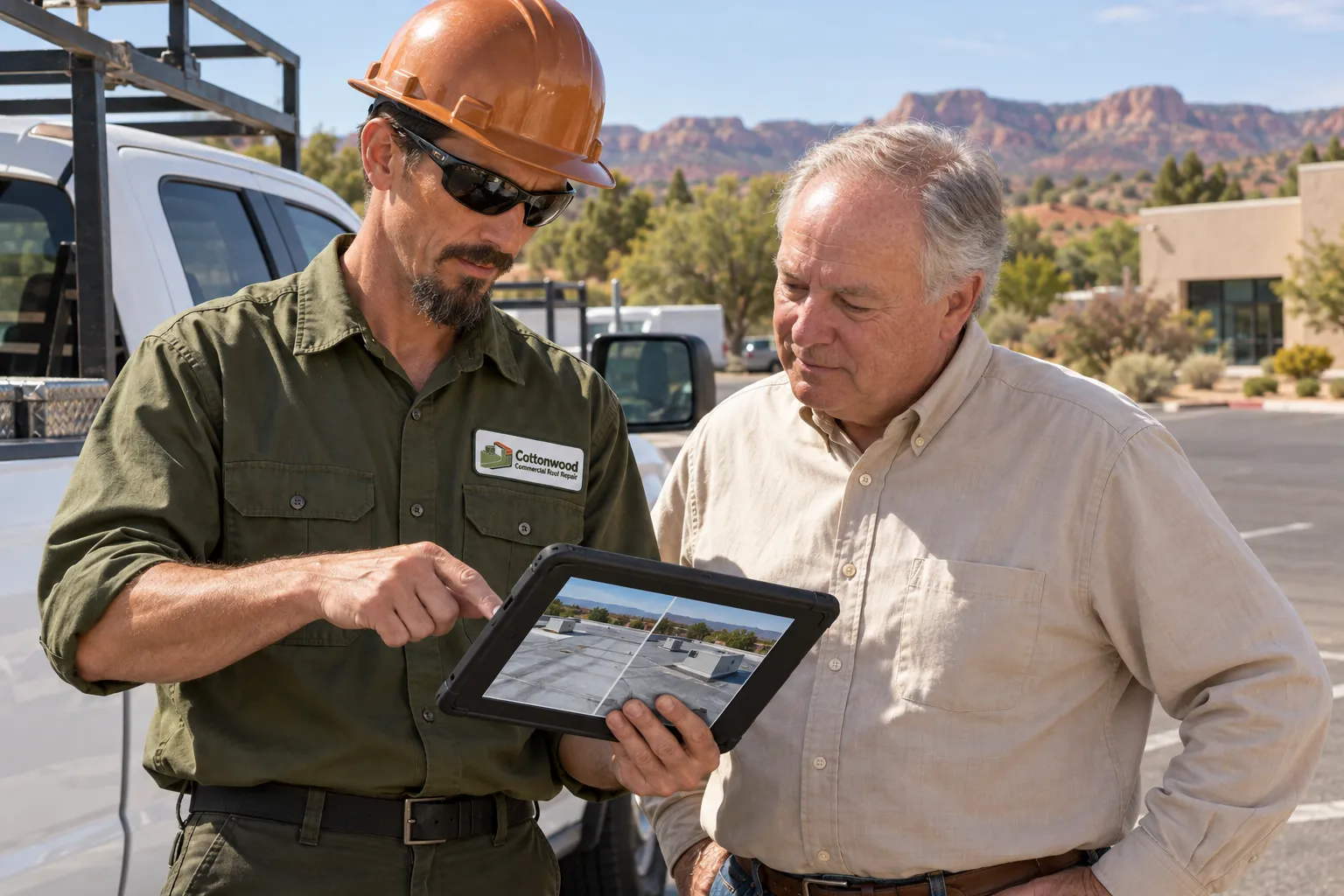
Storage buildings, shops, and small offices around Rimrock often sit empty for days, so storm damage can go unseen until a tenant reports a wet floor. By then the insurer will want proof of what the wind or hail did.
Arizona's Department of Insurance and Financial Institutions advises calling the insurer before repairing or throwing out damaged property, and keeping photos and receipts for emergency repairs. We document first, dry the roof in, then make the permanent repair.
Monsoon season runs June 15 to September 30, and its gusts and hail leave marks a camera can capture. These are the ones to photograph before anything gets fixed.
Edge flashing bent upward or missing along a roof edge.
Gusts got under a loose section and pulled it free. The bent piece and any parts on the ground are evidence for the adjuster.
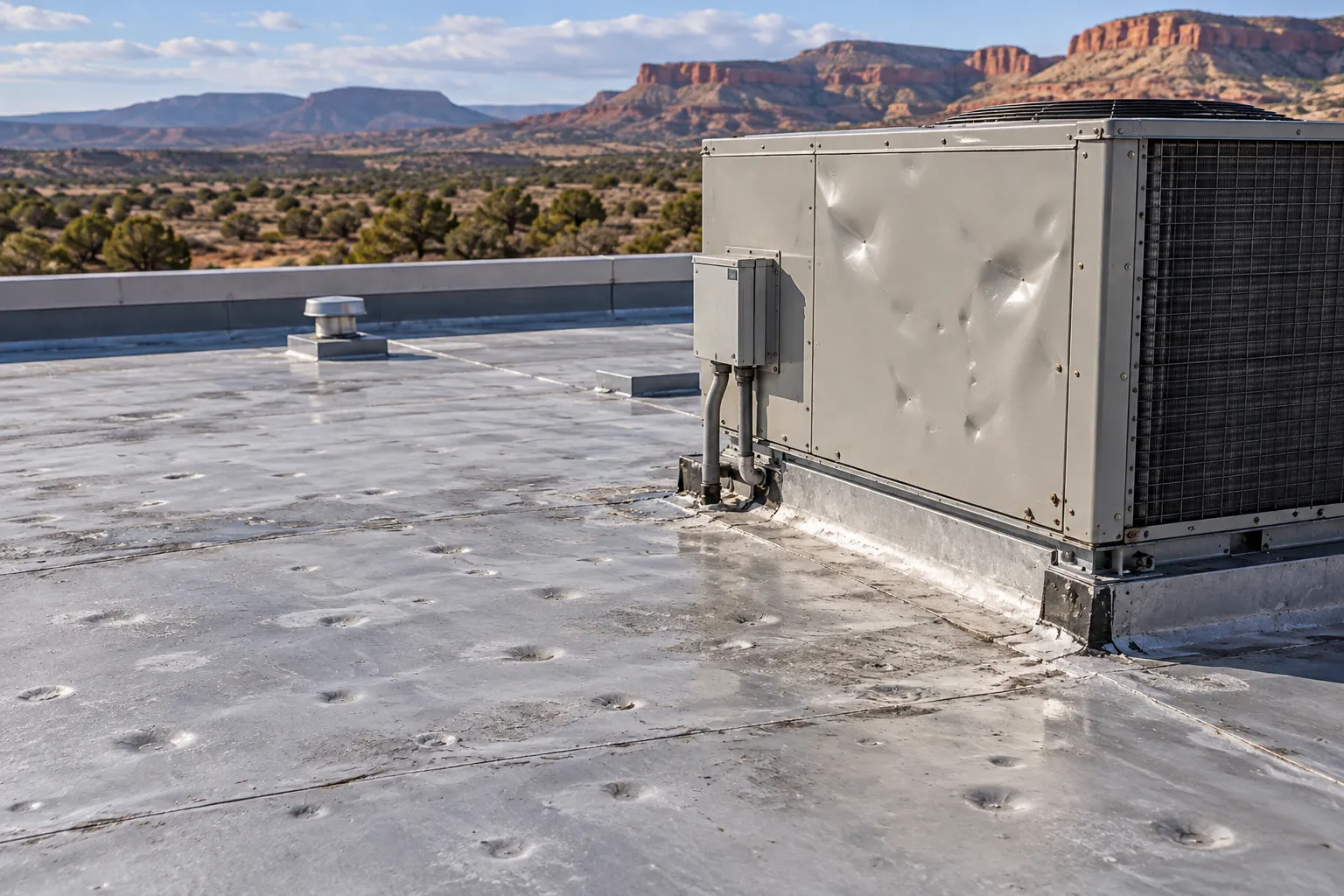
Round dents on rooftop unit housings and small craters in the membrane.
Hail bruises membrane and can crack it at the impact point. Close photos with a coin or tape for scale show the size of each strike.
Panel edges raised at the eave, with fasteners pulled through or missing.
Once a panel lifts, the next gust can peel it further. A temporary refasten after photos keeps the damage from spreading.
Puddles, wet stock, or a fresh stain discovered on the next visit.
Interior damage counts in a claim too. Dated photos inside, before cleanup, tie the leak to the storm that caused it.
Branches and wind-blown debris jammed in drains and scuppers.
Blocked outlets let rain pile up on the roof after the storm passes. Clearing them is a quick temporary step worth photographing first.
Fast documentation and a solid dry-in limit how far storm damage spreads on a building nobody watches every day.
Dated photos of torn membrane and saved flashing give the insurer a clear picture of the storm damage.
A prompt dry-in keeps rain from soaking the boards under a torn section.
Inventory in storage buildings stays out of puddles between visits.
Refastening a lifted panel stops wind from peeling the rest of the row.
Sealed curbs around hail-dented units keep water out of the duct below.
Steel deck under damaged membrane stays free of standing water and rust.
Logged tarps, seam tape, and refastened panels, with receipts, support reimbursement for emergency repairs.
A roof with years left keeps them when storm damage is closed quickly.
Storm damage around Rimrock lands most often on metal buildings and shows up as leaks inside.
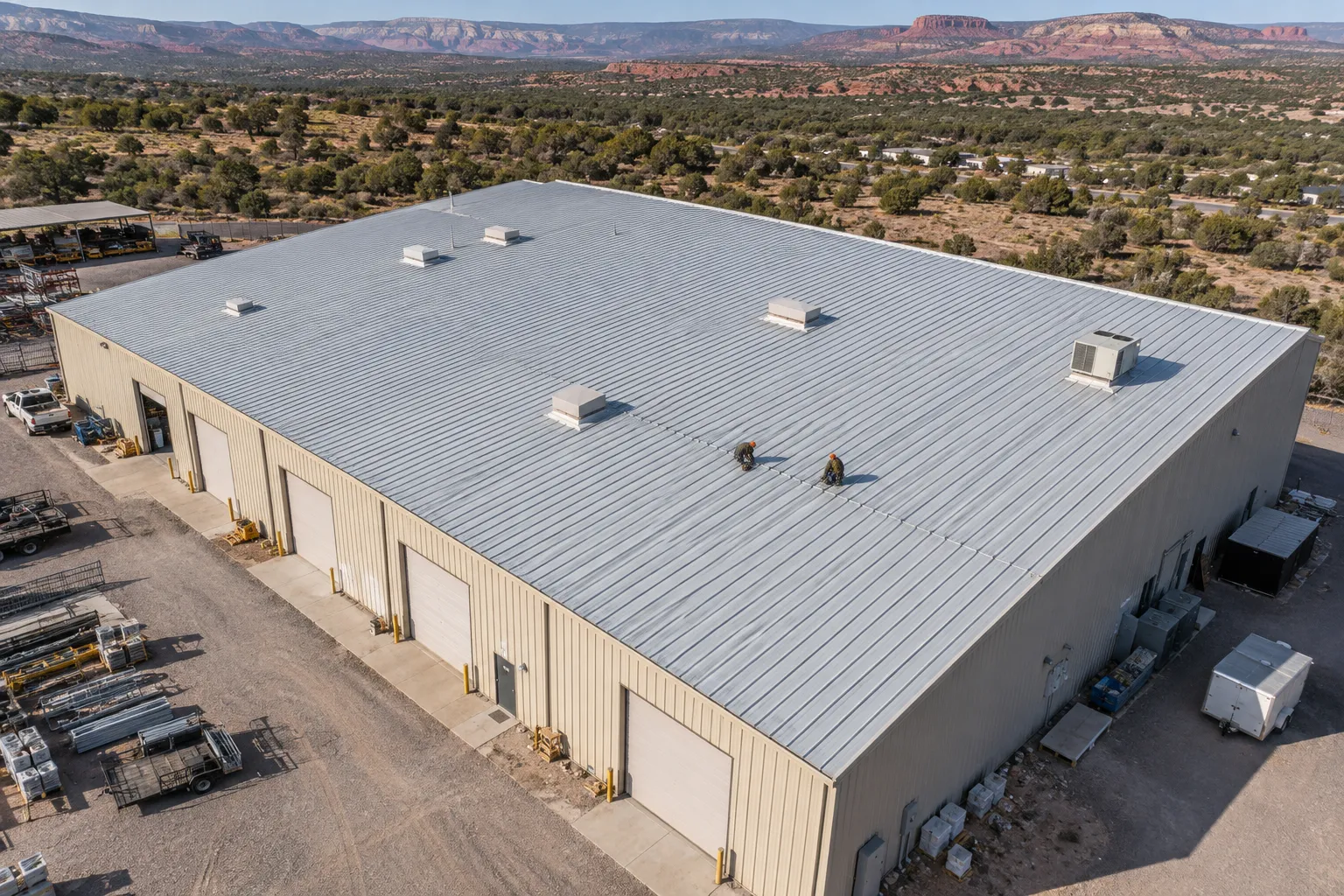
Lifted panels, pulled fasteners, and bent ridge or eave trim get refastened or replaced to match the existing profile once the damage is documented.
Commercial metal roof repair details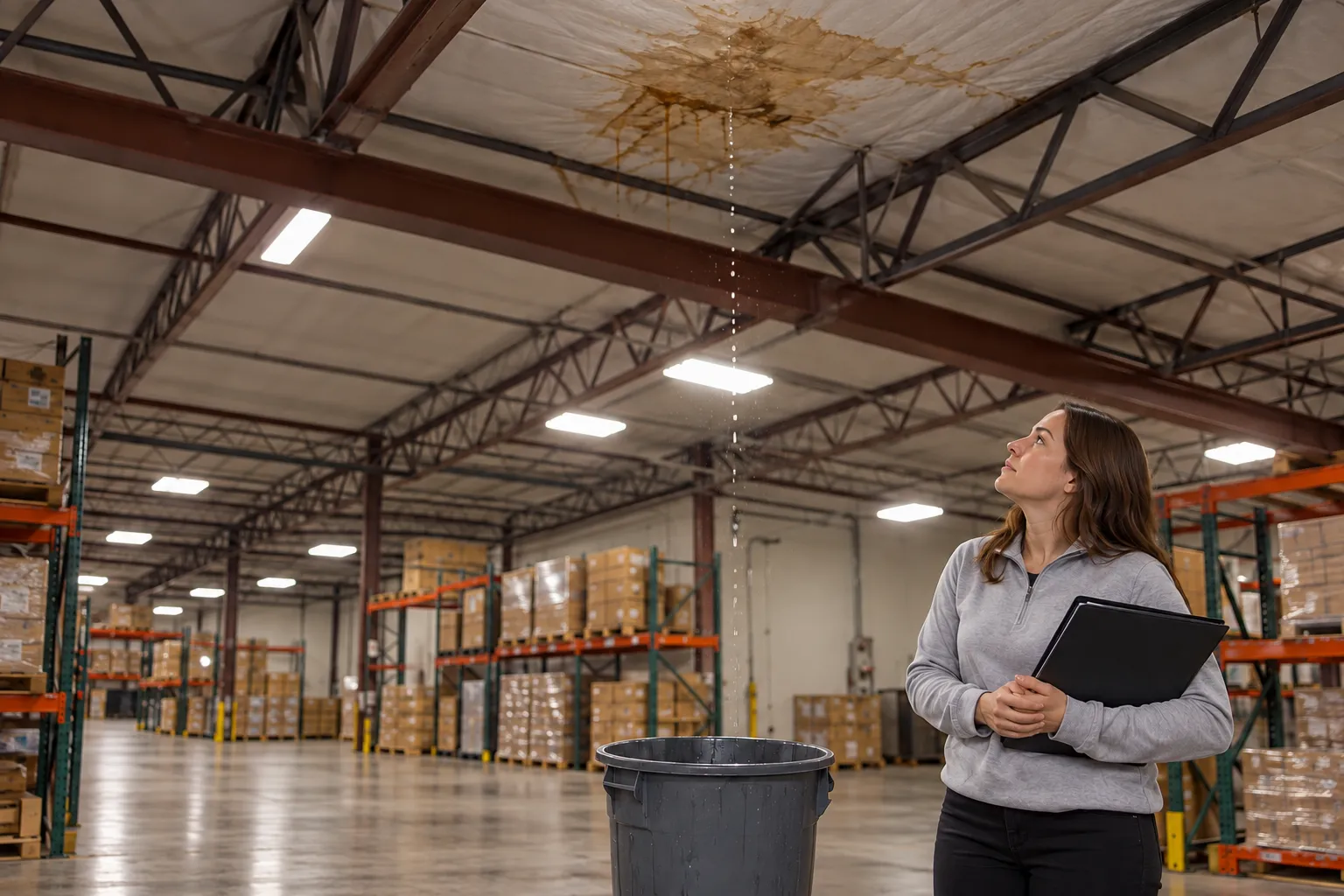
A wet floor found days after a storm gets traced back to the torn sheet, lifted flashing, or dented curb where rain got in.
Commercial roof leak repair detailsCall your insurer first, then call us. Say which sections look damaged and whether water got inside, and keep any parts that blew off.
After a storm, records come before repairs. The order below keeps the claim and the roof both in good shape.
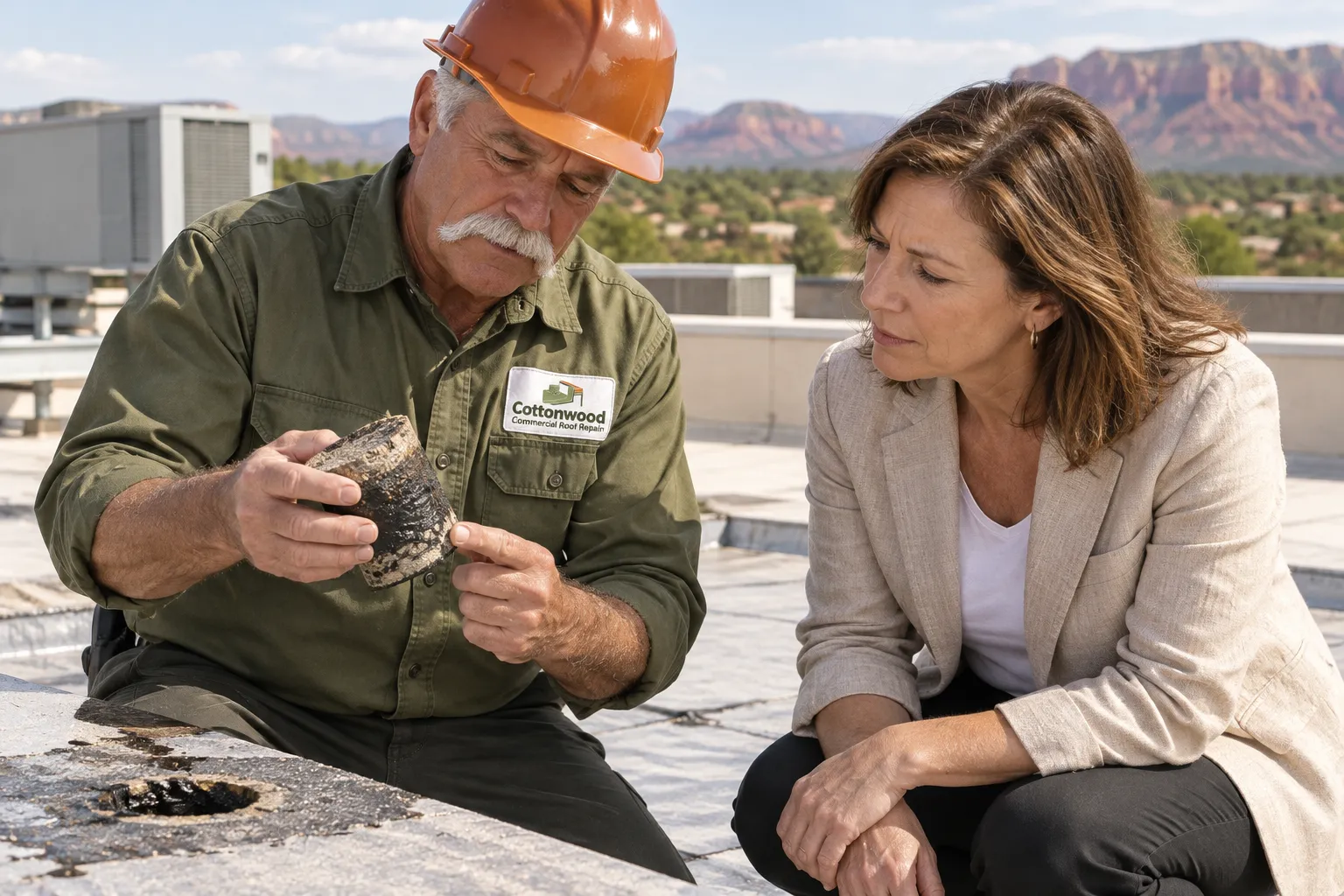
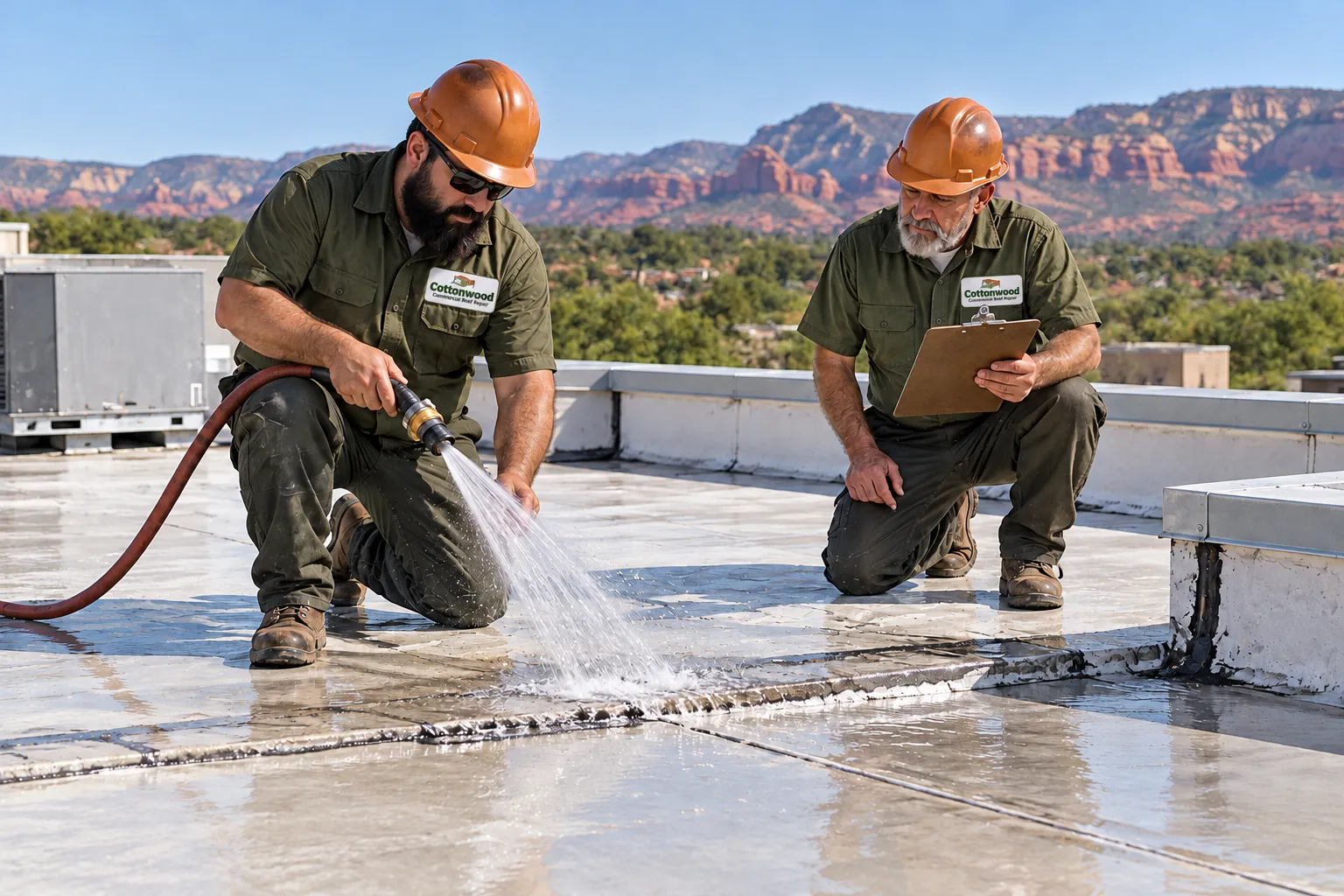
A roofer reached from I-17 walks the whole roof, photographing each damaged section wide and then close, with a tape or coin for scale and the date recorded.
Wet stock, ceiling stains, and puddles get photographed before cleanup, with dates, so the interior side of the claim matches the roof side.
Torn sheet gets taped or covered with a weighted tarp, lifted panels are refastened, and drains are cleared. Each temporary step is logged with receipts.
Roof photos, the dry-in log, and any saved flashing or panels go to the owner for the insurer, along with a plain list of what needs permanent repair.
Once the claim path is clear and a county permit is in hand if needed, torn membrane, flashing, and panels are replaced to match the roof.
Rimrock sits southeast of Cottonwood near I-17. These neighbors share the interstate corridor but differ in permits and roof concerns.
Answers for owners of Rimrock buildings checked only now and then.
Start with photos and a call to your insurer. Arizona's Department of Insurance and Financial Institutions advises contacting the insurer before repairing or throwing out damaged property, and keeping photos and receipts for emergency repairs.
Capture wide shots of each roof section, close-ups of torn membrane or bent panels, interior stains with dates, and parts on the ground. Verify any contractor's license with the Arizona Registrar of Contractors.
No. Reasonable steps to stop more water getting in, like taping a tear or tarping an opening, protect the building. Photograph the damage first, keep receipts, and save any removed parts so the adjuster still sees the original condition.
During monsoon season, which the National Weather Service dates from June 15 to September 30. Gusts and hail from those storms lift edge metal, dent units, and drive rain into weak seams, so a roof walk after each big storm pays off.
Ask a tenant or neighbor to look for bent edge metal or debris on the ground after storms, and check inside for wet floors on each visit. A spring and fall roof inspection also catches loose panels before a storm takes them.
It mostly affects staging. Materials, tarps, and fasteners for both the dry-in and the likely permanent repair are loaded for one trip, so a remote building does not wait on a second run for parts.
Yavapai County Development Services, since Rimrock is unincorporated. Confirm jurisdiction by parcel number before permanent membrane, flashing, or panel work starts.
Dents alone often leave the panel watertight, so they get documented and watched. Panels that cracked at a fastener, lost coating, or lifted at the laps get refastened, sealed, or replaced with the same profile.
Tell us when the storm hit and what you have found so far. A roofer records the damage first, then dries in the roof.
Leave a name and number and a roofing contractor will call you back about the leak or damage.
Or call now: (928) 436-4827