A Lap Split Mid-Storm
- You See
Water dripping through a ceiling tile within an hour of heavy rain.
- What It Means
A freshly opened lap lets water straight in. Seam tape or sealant holds it until the area dries enough for a welded or adhered repair.

Sedona commercial roof repair in two moves: stop the water now with a logged stopgap, then finish the permanent repair in a muted, non-reflective tone.
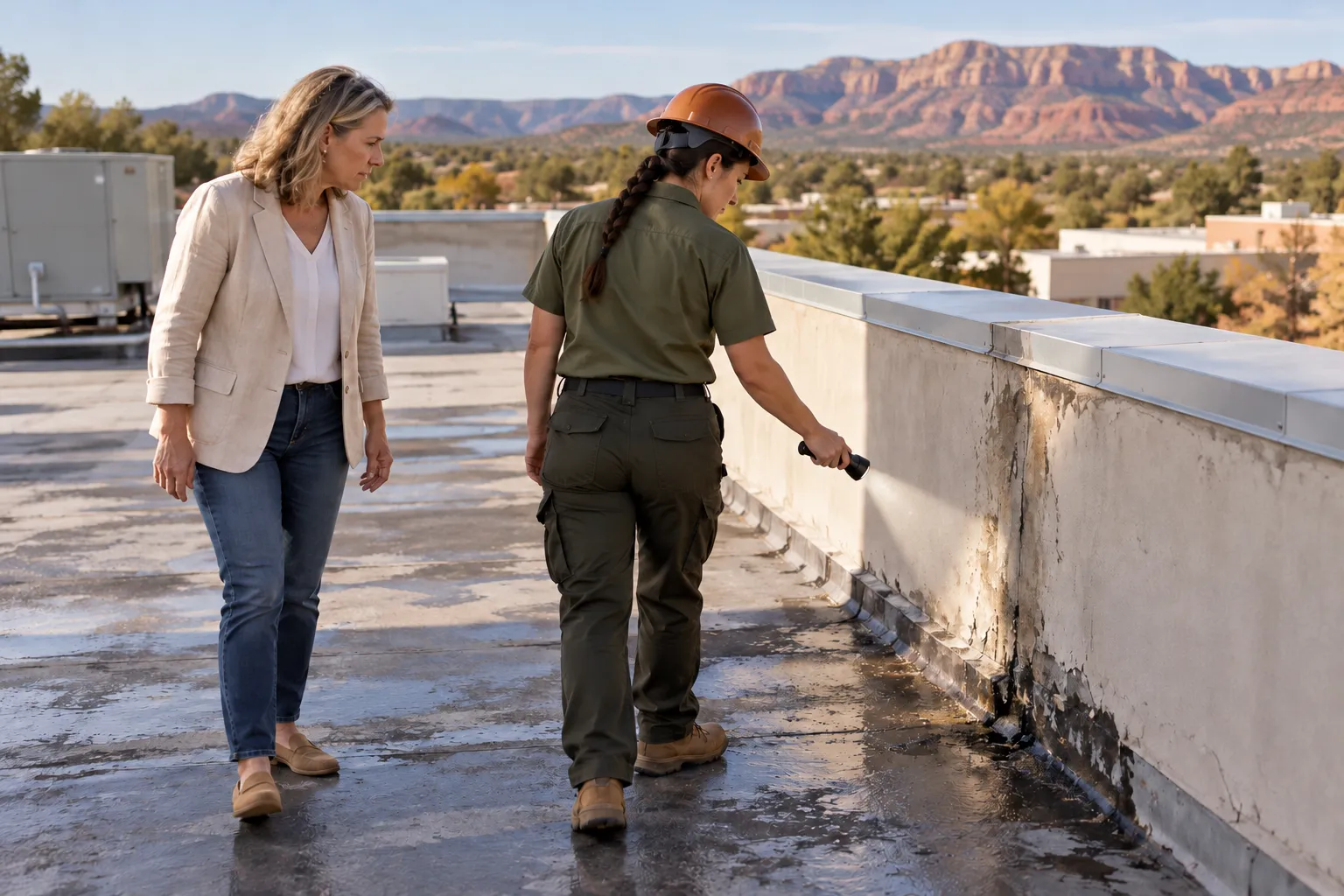
A leak during a monsoon week needs water control before it needs a final color. Seam tape over a split lap, a weighted tarp over torn membrane, or a cleared scupper buys time, and each one is written down with its date and location.
The permanent repair then follows Sedona's Land Development Code, which bans white, bright, and reflective roofs and requires metal treated against glare. Patches, coatings, and replacement panels are picked in muted tones before the work is scheduled.
These are the Sedona conditions where water control comes before the permanent repair.
Water dripping through a ceiling tile within an hour of heavy rain.
A freshly opened lap lets water straight in. Seam tape or sealant holds it until the area dries enough for a welded or adhered repair.
A flap of membrane lifting near the roof edge after gusts.
Loose sheet keeps tearing in the next gust. Weighting a tarp over it protects the insulation until new membrane goes in.
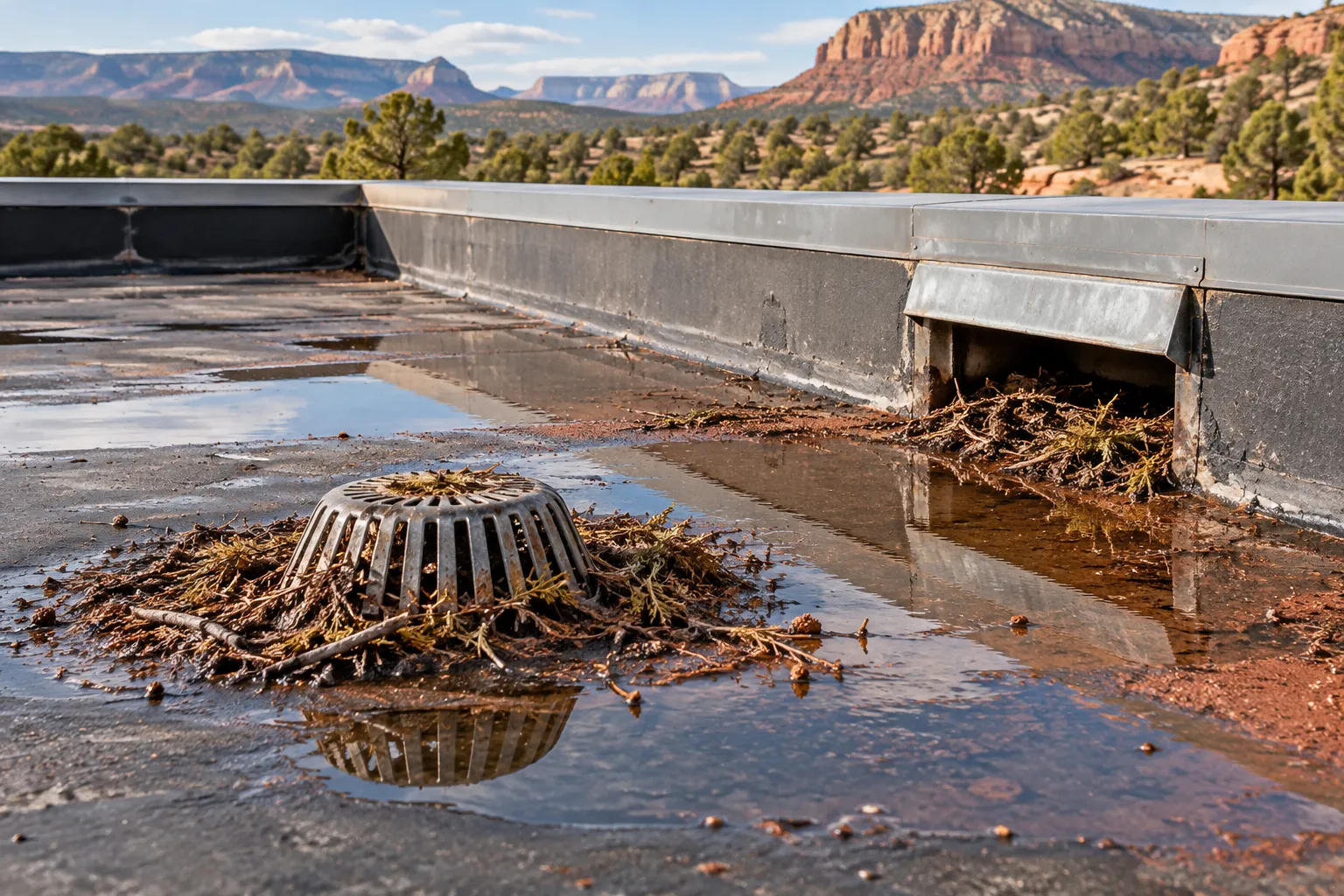
Standing water at a parapet scupper packed with leaves and twigs.
Backed-up water rises past flashing heights. Clearing the scupper drops the level at once, and the liner gets checked for splits.
Boxes, displays, or equipment directly below an active stain.
Plastic sheeting and buckets protect what sits below while the roof work is lined up. Each covered area is marked on the leak log.
Shiny replacement flashing or panels waiting to go on a metal roof.
Sedona requires metal treated against glare. Painted or treated flashing and panels get ordered before the permanent visit.
Handling the stopgap and the final finish in order protects the building and keeps the roof inside the city's color rules.
Finished interiors under the leak stay dry while the permanent repair is planned.
Quick water control keeps boards under a split lap from soaking through.
Muted, non-reflective patches and coatings stay within Sedona's roof color limits.
Treated replacement panels and flashing match the low-glare finish already on the roof.
Clearing debris early keeps standing water off the liner seams.
Dated stopgap notes make sure every temporary fix is replaced later.
Tiles under an active roof leak get protected before they sag and fall.
Permanent work waits for a dry window instead of going on a wet membrane.
Sedona calls usually start with an active leak, and many involve metal finishes that have to meet the glare rule.

Active leaks slowed with logged stopgaps, traced upslope to the failed seam or flashing, then repaired for good once the roof dries.
Commercial roof leak repair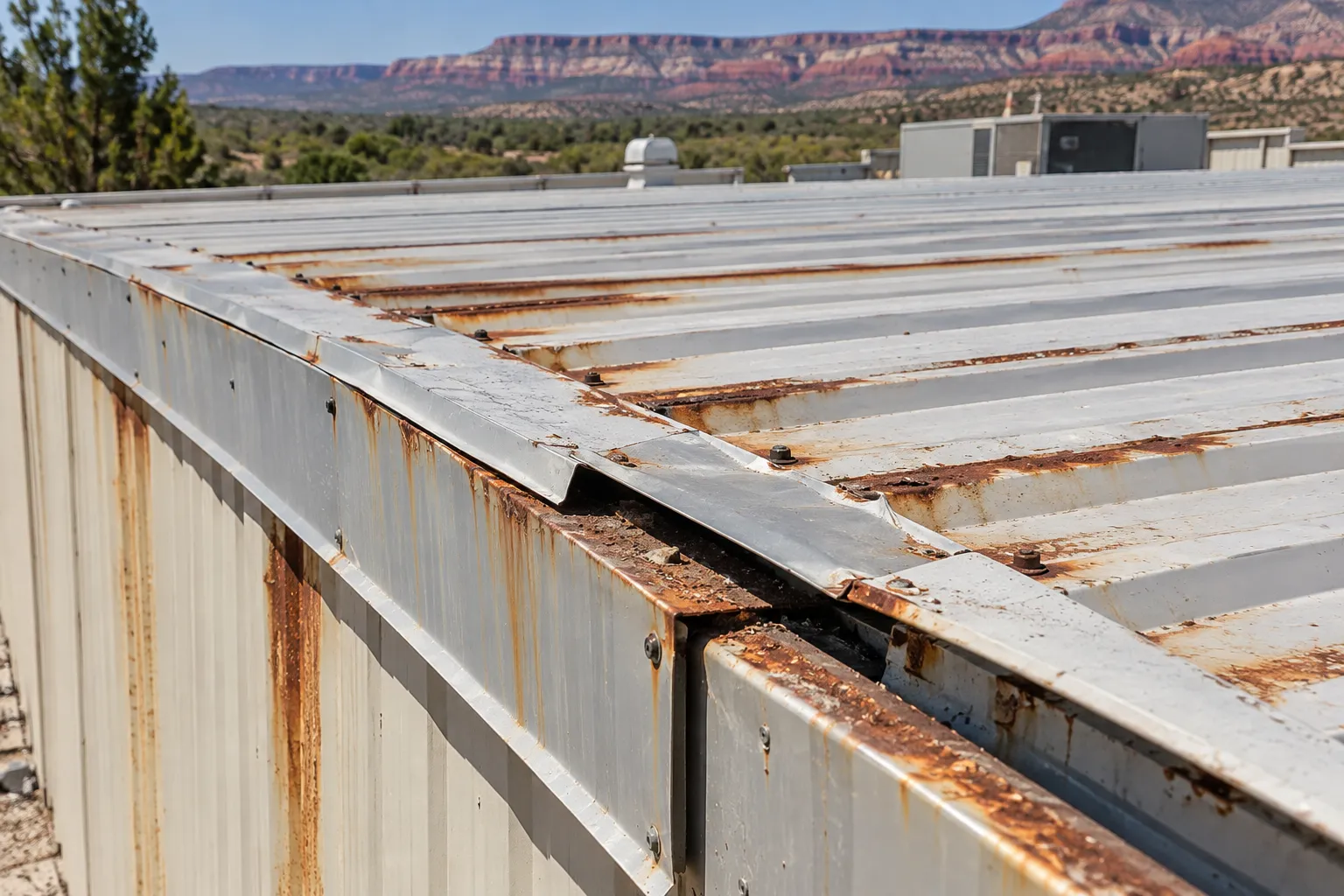
Rusted laps, backed-out fasteners, and loose ridge caps repaired with treated, low-glare panels and flashing.
Commercial metal roof repairCall with the stain location and what sits under it. A stopgap can hold the water now, with the permanent repair planned in an approved tone.
The sequence keeps water out first and finishes the roof in colors Sedona allows.
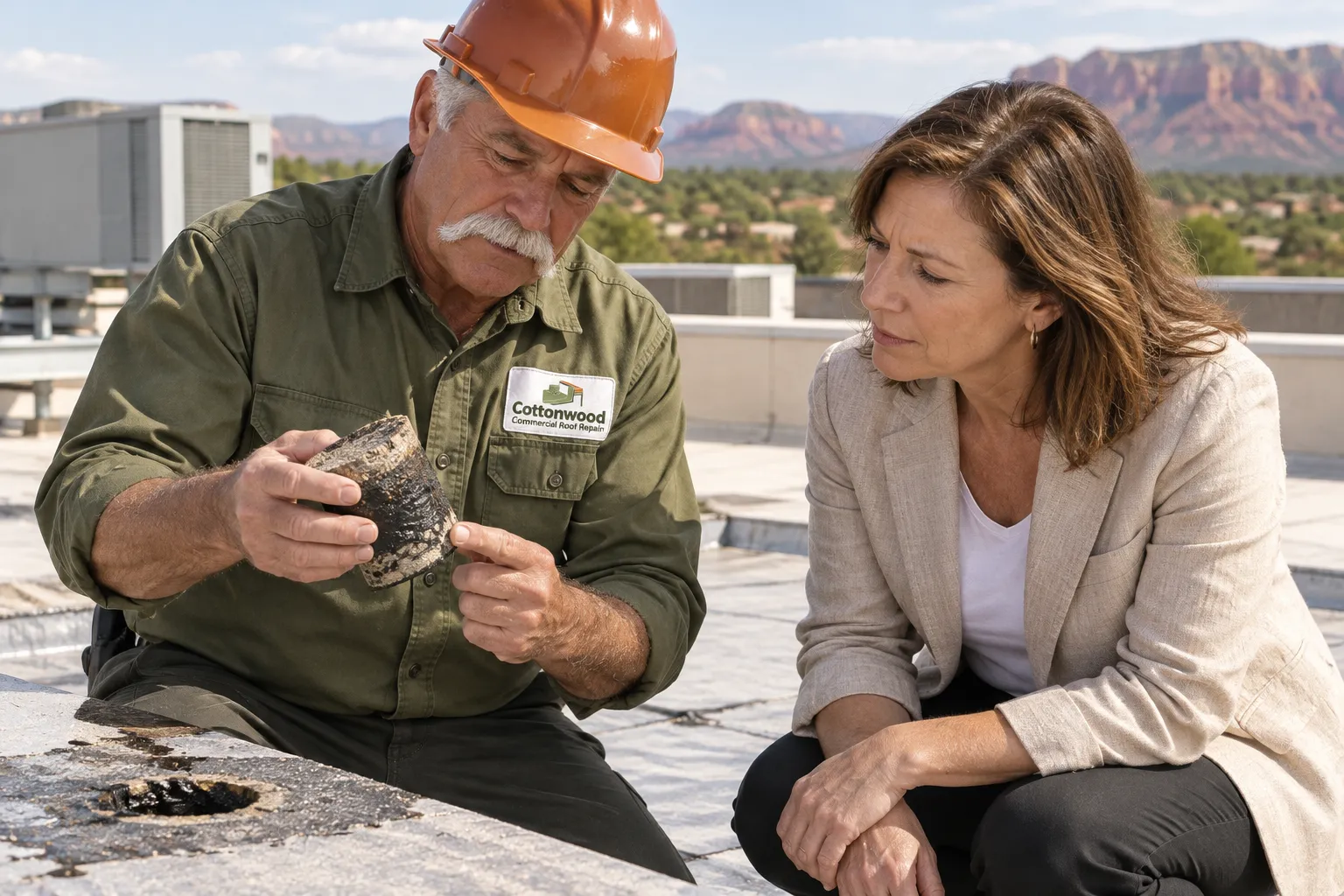
The split lap, torn sheet, or clogged scupper is found, the surrounding seams and flashing are checked, and existing roof colors are noted for the permanent patch.
Plastic sheeting and buckets go over stock and equipment under the drip, and each covered spot is marked on the leak log with a date.
Seam tape, sealant, or a weighted tarp slows the water, and debris comes out of drains and scuppers. Every temporary fix is logged.
Once the roof is dry, the failed detail is repaired with matching membrane or treated metal, and any coating goes on in a muted, non-reflective color.
After the next rain the marked spots below are checked, the sheeting comes down, and each logged stopgap is crossed off as replaced.
Sedona connects to the rest of the Verde Valley by SR 89A and SR 179.
Answers for Sedona owners and managers dealing with an active leak.
Yes. Seam tape or sealant over a split lap, a weighted tarp over torn membrane, a cleared drain or scupper, and plastic with buckets over stock all slow the water. They are stopgaps, so the permanent repair is planned before the next monsoon storm.
Only until the roof dries and materials are ready. Tape and sealant over a wet lap are temporary bonds, and a tarp can shift in the next gust, so each one is logged and replaced at the permanent visit.
Move or cover what sits under the drip, set buckets, and photograph the stain with the date. Those notes help trace the entry point and support any insurance question later.
Yes. The Land Development Code bans white, bright, and reflective roofs, so patches and coatings are chosen in muted tones. A visible repair has to blend with the approved roof color rather than stand out.
Sedona requires metal to be treated against glare, which rules out bare shiny panels. Replacement panels, flashing, and trim are ordered in a treated or painted finish before the permanent repair.
Seams, scuppers, curb flashing, and pipe boots. Strong sun dries their sealant first, and monsoon gusts and downpours test them hardest, so they make up most leak calls here.
Check the color rules first. Cool-roof programs usually call for a listed reflective product, and Sedona limits reflective roofs, so confirm both the utility program and the city rule before choosing a coating.
Tell us where the water shows and what sits below it. A roofer sets the stopgap plan and the permanent repair in an approved tone.
Leave a name and number and a roofing contractor will call you back about the leak or damage.
Or call now: (928) 436-4827