TPO, EPDM, And Mod Bit

Cottonwood Flat Roof Repair

Cottonwood flat roof repair for retail, office, and medical buildings: we reseal lifted laps, rebuild flashing, and clear failing drains with patches that match your membrane.

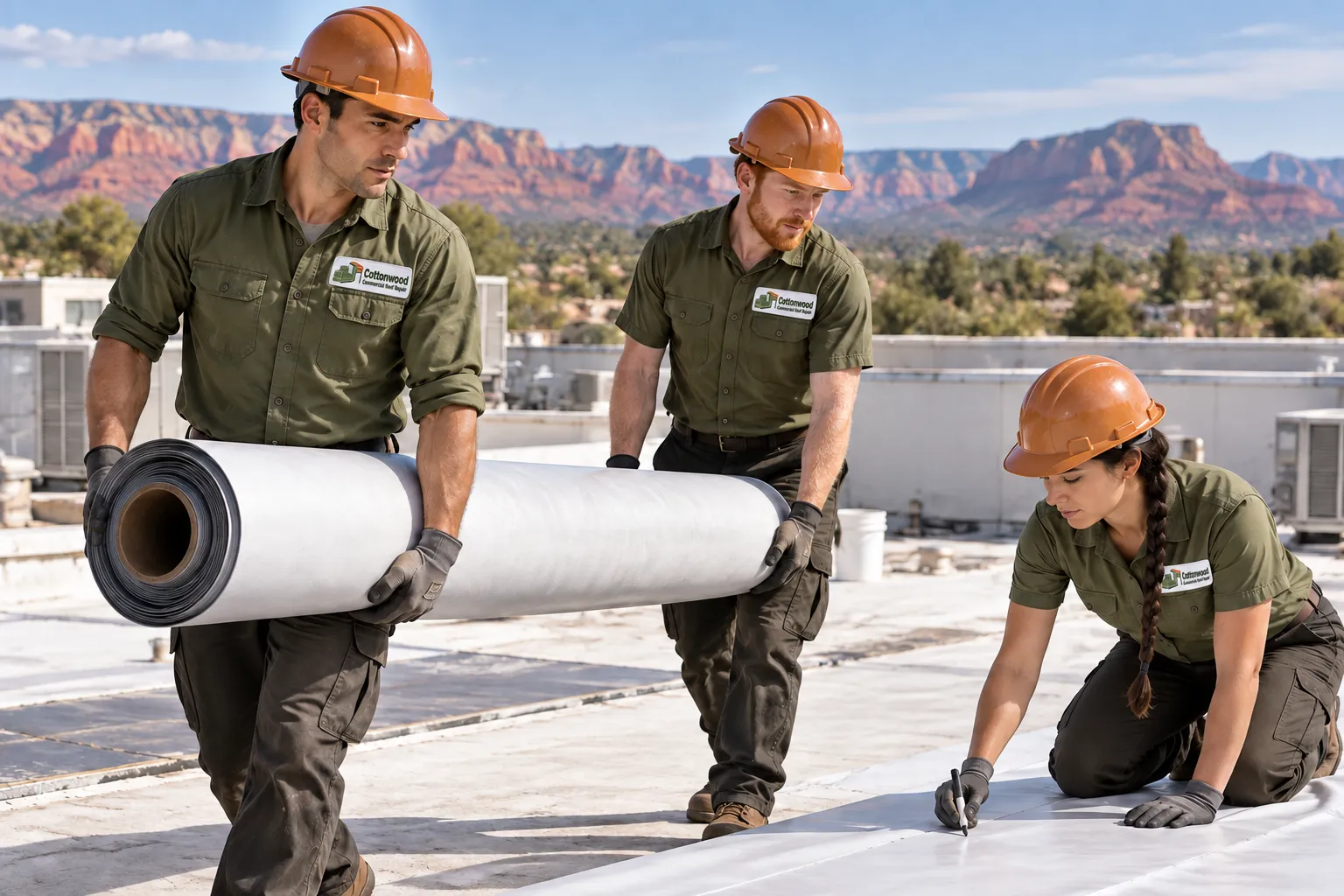
Roofers carrying a roll of white membrane across a flat commercial roof in Cottonwood, AZ
  • Where Leaks StartJoints, edges, and openings
  • Patch MaterialSame type as your roof
  • Before CuttingMoisture readings at soft spots
  • Best Season To SealFall, before hard freezes

When A Flat Roof Patch Holds

A flat roof with dry insulation and a flexible sheet takes a repair well. Wide wet areas and brittle membrane change the answer.

Repair Works Here

  • A lifted lap or split seam in one area
  • Cracked flashing at a curb, pipe, or parapet
  • A drain ring or scupper liner that lets water by
  • One or two blisters with dry board under them
  • A ponding ring near a single low spot

Plan A Bigger Fix

  • Soft spots across several roof sections
  • Membrane that cracks when you fold a loose edge
  • Blisters spreading across the open field
  • Seams opening along most of the roof
  • Patches stacked on patches at the same drain

Flat Roof Trouble By Cause

Flat roofs in Cottonwood fail at the places where the sheet meets something else. These causes account for most of the calls.

Sun

Brittle Sealant At Pitch Pans

You See

Pitch pan filler shrunk away from the pipe, with dark cracks at the rim.

What It Means

UV dries sealant faster than the membrane around it. The old filler comes out and the pan gets refilled and its flashing resealed.
Freeze

Lap Edges Opening Up

You See

Seam edges you can slide a fingernail under, often near low corners.

What It Means

Water trapped in a seam gap freezes overnight and pushes the lap apart. Cleaning and re-welding or re-adhering the lap closes it for good.

Dust

Scuppers Holding Water

You See

A ring of red silt and standing water in front of a parapet scupper.

What It Means

Silt narrows the opening until storms back water onto the seams. Clearing the scupper and resealing its liner gets the roof draining again.

Age

Counterflashing Pulling Loose

You See

Metal under the parapet cap leaning out, with sealant missing behind it.

What It Means

Water gets behind the base flashing and runs down inside the wall. Resetting the counterflashing and new base flashing seal the parapet.

Drainage

Rings That Stay Wet

You See

A dirt ring that still holds water two days after rain.

What It Means

Standing water keeps working at patches and seams. Building up the low spot sends water back toward the drain.

Moisture

Blisters In The Field

You See

Raised bubbles in the sheet that feel spongy underfoot.

What It Means

Trapped moisture or air lifts the top layer. Small blisters get cut out and patched once the board below reads dry.

Flat Roof Repair Choices For Cottonwood Buildings

Each repair matches the membrane already on the building, whether it is TPO, EPDM, or modified bitumen.

RepairWhat It FixesWhen It Is Enough
Seam re-weld or re-adhereLifted or split lapsThe sheet beside the seam still bends without cracking
Flashing rebuildLeaks at curbs, pipes, and parapet wallsThe wall and curb behind the flashing are dry and solid
Drain and scupper resetWater slipping past clamping rings and linersThe drain body itself is intact
Blister and wet-spot cutoutRaised bubbles and small soaked areasWet insulation stays within a few square feet

What Repairing Your Flat Roof Protects

A tight seam or a fresh flashing does more than stop a drip. These are the parts of a flat-roof building it keeps dry.

Roof Insulation

Boards under the membrane stay dry and keep doing their job.

Deck Below

Steel or wood deck avoids the rust and rot that follow a slow leak.

Finished Ceilings

Office and clinic ceiling tiles under the roof skip the brown rings and replacements.

Unit Curbs

Sealed curb flashing keeps water out of duct openings under rooftop units.

Parapet Walls

Closed counterflashing keeps water from running down inside the wall.

Drain Lines

Clean, sealed drains move water off the roof instead of into the building.

Membrane Life

Seams closed early let a younger sheet reach its full service years.

Replacement Timing

Steady repairs let a full reroof wait until the whole field is worn.

Seam Lifting After The Last Storm?

Call with the roof type if you know it and where the water shows inside. A lifted lap can be taped before rain while the permanent re-weld is planned.

Flat Roof Repair Step By Step

The roof lane covers the membrane work. The building lane covers what happens below the leak while the roof gets fixed.

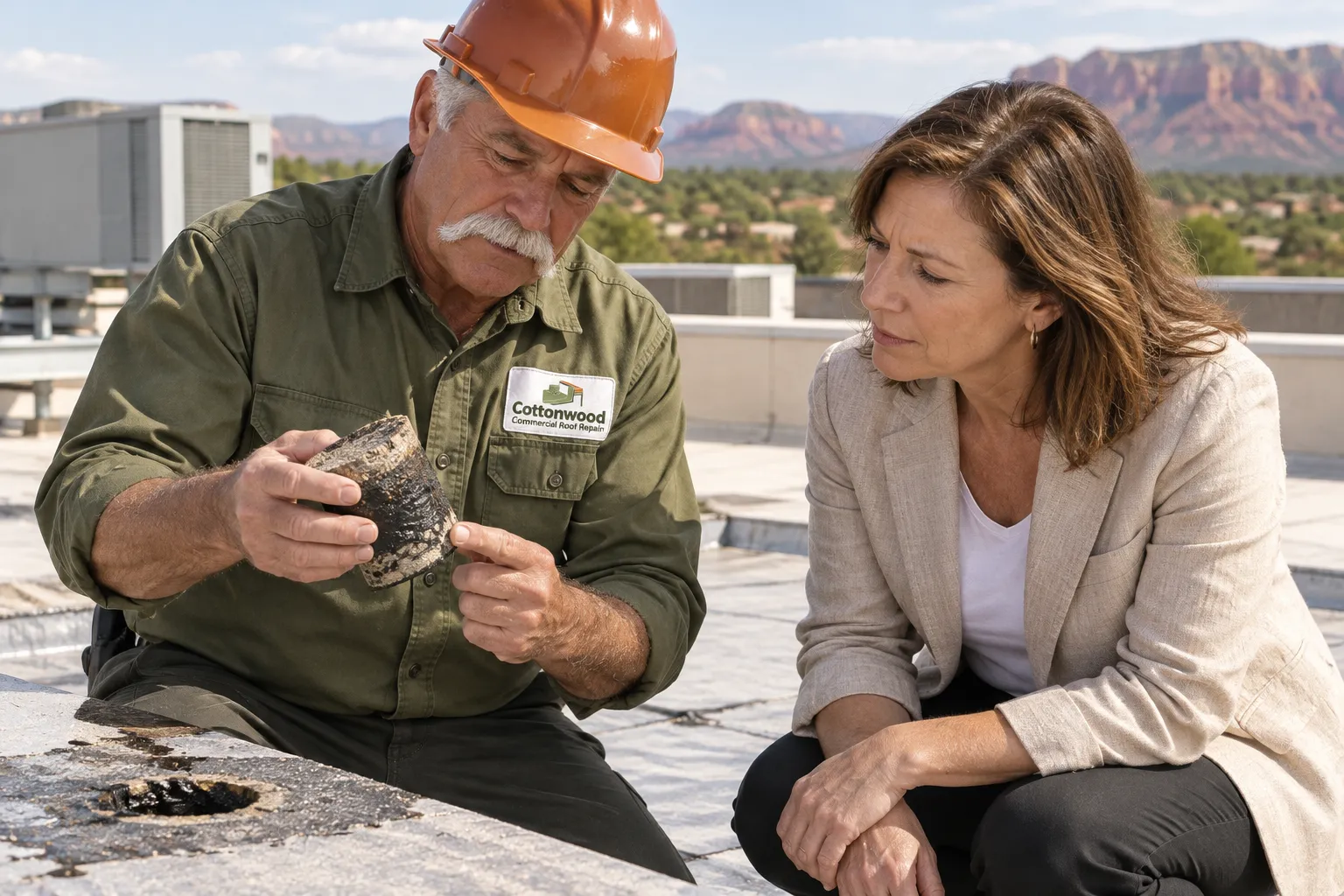
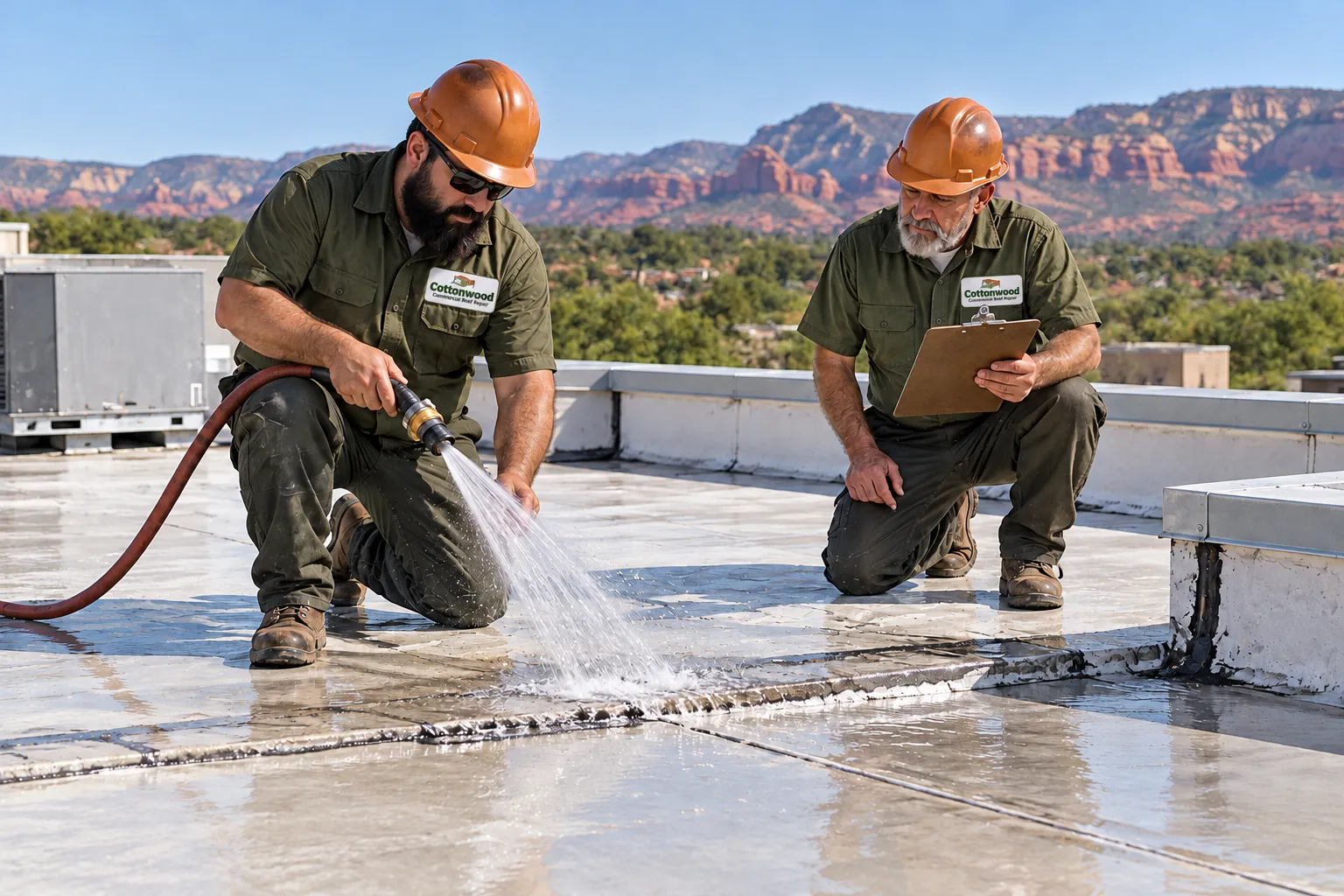
Roofer holding a core sample from a flat roof while a property manager looks onTwo roofers running a hose test along one seam of a flat commercial roof
On The Roof
Around The Building
On The Roof

Step 1: Inspect Your Roof

Every lap, drain, scupper, curb, and parapet cap gets checked by hand and eye. Core cuts or meter readings near soft spots show whether the insulation under the membrane is dry.

Around The Building

Step 2: Protect The Space Below

Plastic goes over stock, desks, or equipment under the drip point. The stain and drip location get photographed so the repair can be checked against them later.

On The Roof

Step 3: Clean And Prep The Sheet

Dirt, old sealant, and loose granules come off the area around each failed seam or flashing. TPO and EPDM get the cleaner or primer their maker calls for.

On The Roof

Step 4: Weld, Adhere, Or Patch

Laps get re-welded or re-adhered, cracked flashing is replaced, and blisters are cut out and covered with membrane of the same type as the roof.

Around The Building

Step 5: Confirm After Rain

Once a storm passes, the ceiling, wall, and stock under the old drip get checked. Any fresh water sends a roofer back to the nearest seam upslope.

Related Repair Services

Flat roof work often overlaps with these two services.

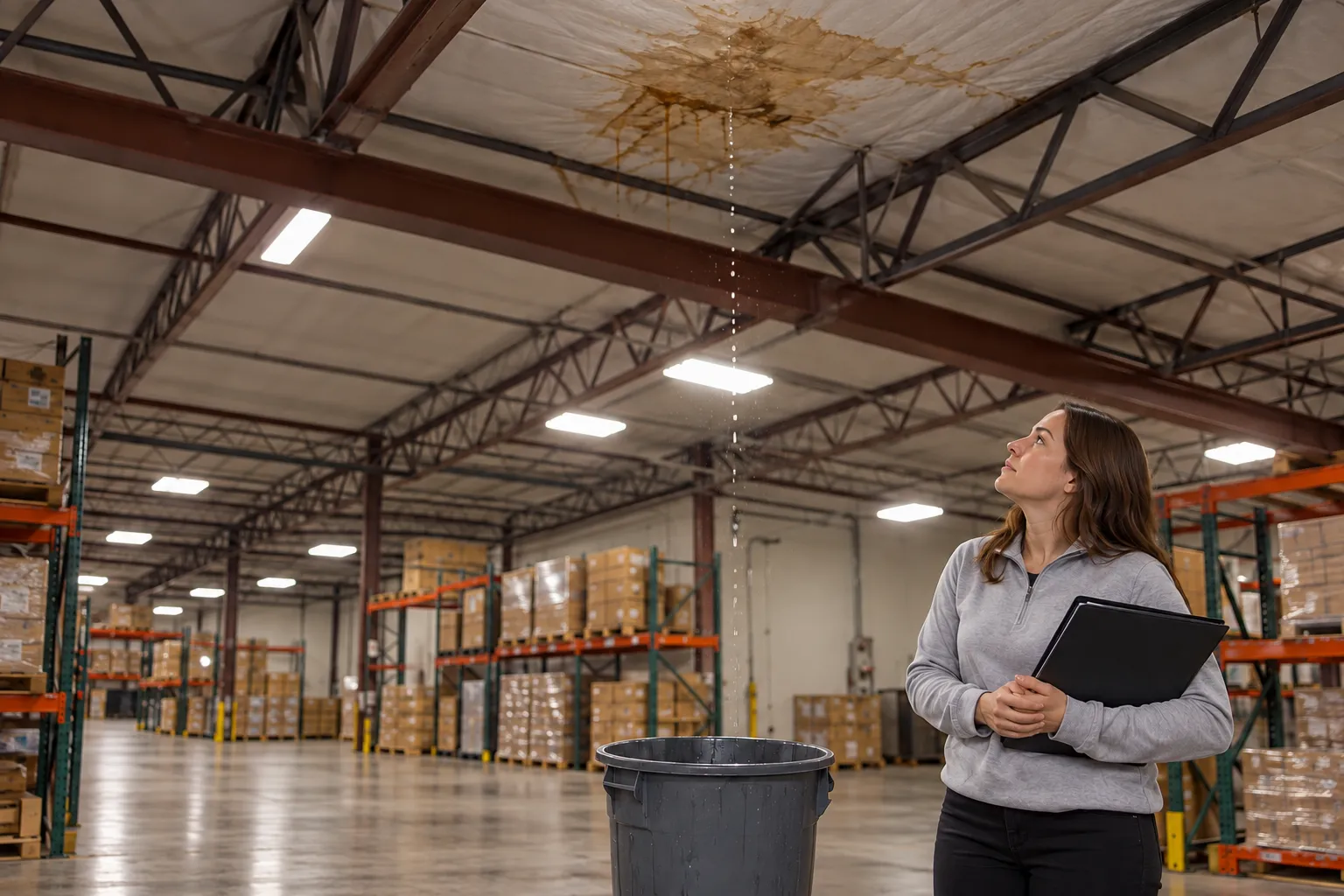
Facility manager looking at a stained warehouse ceiling above a drip bin

Commercial Roof Leak Repair

When the stain inside sits far from any obvious seam, leak tracing finds the true entry point on the membrane before a patch goes down.

Trace a commercial roof leak
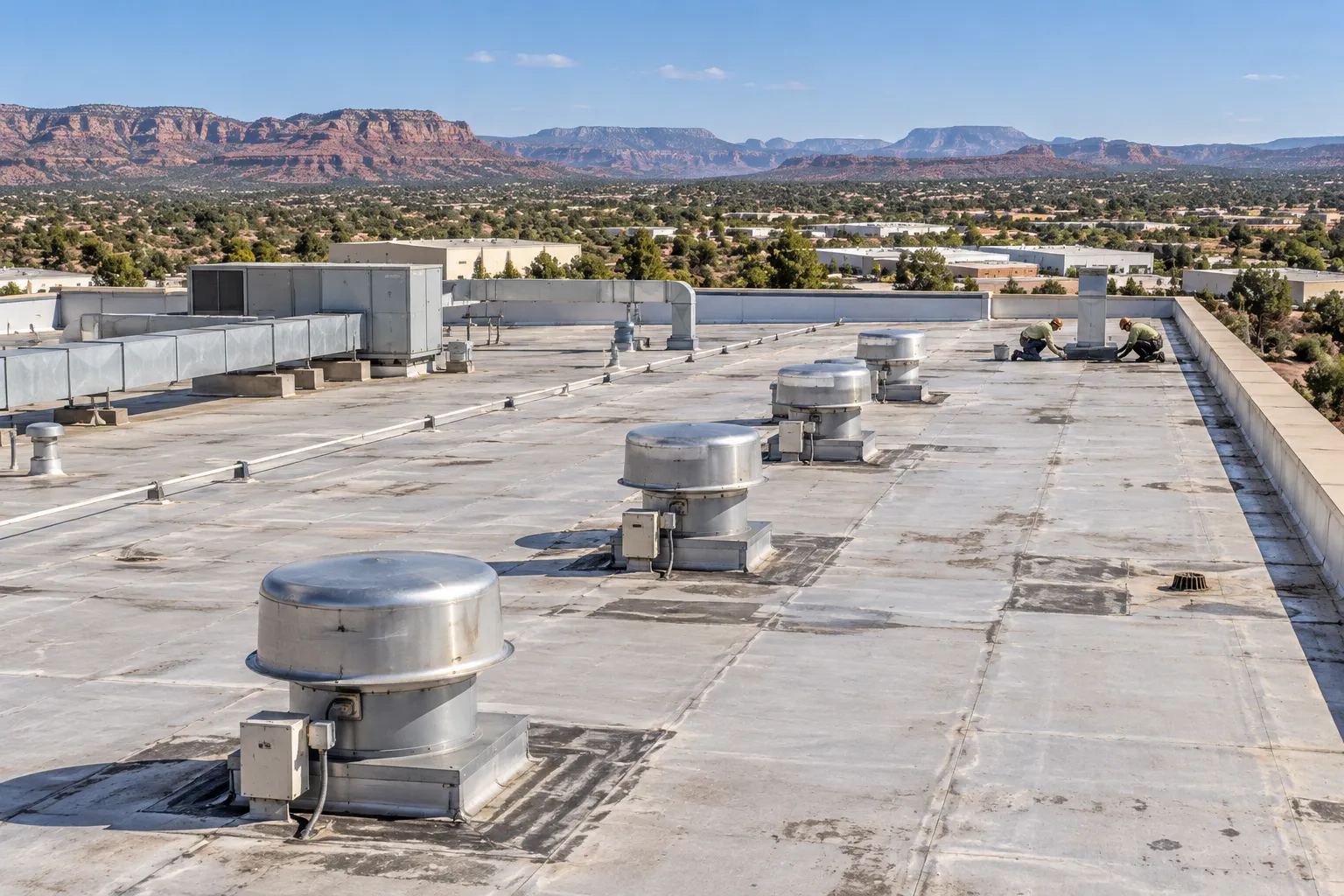
Industrial flat roof with rows of exhaust fans and ductwork

Industrial Roof Repair

Plant buildings add exhaust fans, stacks, and walkway traffic to the flat roof, so repairs there follow lockout steps and production schedules.

Industrial roof repair near Cottonwood

Flat Roof Repair Questions

Answers for owners of flat-roof retail, office, and medical buildings around Cottonwood.

Where It Leaks

Where do flat commercial roofs in Cottonwood usually leak?

At joints and edges far more than in the middle of the sheet. The first places to look are lifted laps, drains and scuppers packed with dust or leaves, HVAC and vent curbs, parapet caps and the counterflashing under them, and pipe boots or pitch pans.

Cottonwood sun and wide day-to-night swings age the sealant at those points faster than the membrane itself.

Why does my flat roof leak only in heavy storms?

Heavy rain raises the water level on the roof until it reaches a gap that light rain never touches. A slow drain, a low lap at a scupper, or flashing that ends too low on a curb are the usual culprits, and all three show up during a careful roof walk.

What The Repair Covers

What does flat roof repair include on a Cottonwood commercial building?

That comes down to what the inspection finds at seams, drains, and flashings. On retail, office, and medical roofs the work commonly covers re-welding or re-adhering open seams, replacing cracked curb and parapet flashing, cutting out blisters and patching with matching membrane, resetting drain clamping rings and scupper liners, and building up low spots where a ponding ring holds water.

Every patch uses the membrane type already on the roof.

Can a TPO patch go on an EPDM roof?

No. TPO is heat-welded and EPDM is adhered with tape or primer and adhesive, and the two do not bond to each other. Each repair uses the same system as the roof, which is why the inspection confirms the membrane type before any material is ordered.

Do blisters always need to be cut out?

Only the ones that are cracking, growing, or sitting over wet insulation. A small, firm blister on dry board can be marked and watched. Once a blister splits, water gets under the top layer, so cracked ones get cut out and patched right away.

Timing And Upkeep

When is the best time to repair flat roof seams here?

Fall works well, because small seam openings get sealed before freezing nights pry them wider. Spring is the other window, ahead of the monsoon. Active leaks get a stopgap at any time of year, with the permanent repair scheduled for the next dry, mild stretch.

How can staff keep a flat roof draining between visits?

Clearing drain baskets and scuppers of leaves and dust after windy weeks does the most good. Staff should also keep service techs on walkway pads near rooftop units and report any new ceiling stain right away, with a photo and the date.

Get The Seams Closed Before Winter

Tell us the roof type, where the water shows inside, and how the roof is reached. A roofer inspects first and explains the repair.

Call Us (928) 436-4827