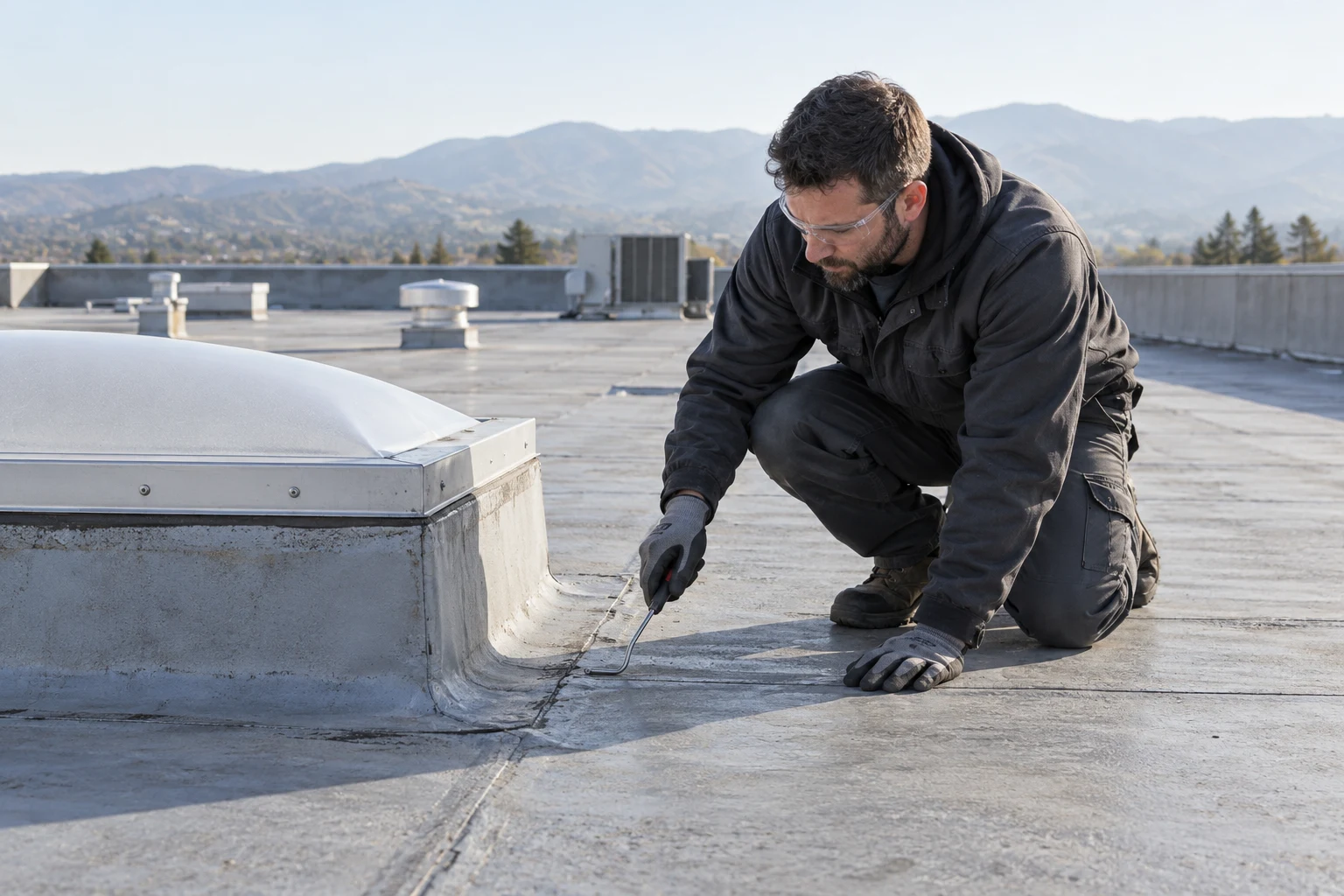
Follow The Roof Configuration
Panel profiles and attachment methods influence how a metal roof is repaired. A defect at a lap may require a different approach from a damaged flashing or fastener connection. The work must fit the existing roof design.
Earlier repairs can obscure the original detail. They should be assessed before another layer of unrelated material is applied over them. The aim is to correct the relevant connection, not simply conceal its appearance.
Review Corrosion And Panel Integrity
Surface deterioration may be repairable under an appropriate scope. Material loss, perforation or extensive corrosion can require panel replacement or broader work. A sealant or coating does not restore metal that is no longer sound.
The surrounding panels and connections also matter. A local repair needs a serviceable area to connect to, and repeated failures may point toward conditions beyond one isolated defect.
Examine Penetrations And Joints
Pipes, vents, wall transitions and equipment supports interrupt the panel system. Movement and geometry can influence their repair requirements. If an issue began after equipment work, share that history as part of the assessment.
Water that has entered below the panels may have affected other components. Those concerns should be considered separately from the visible metal repair.
Request A Defined Scope
Provide the address and describe whether the concern involves a leak, a damaged panel or a recurring connection issue. The inspection establishes which components can remain and what repair or replacement is needed at the affected area.