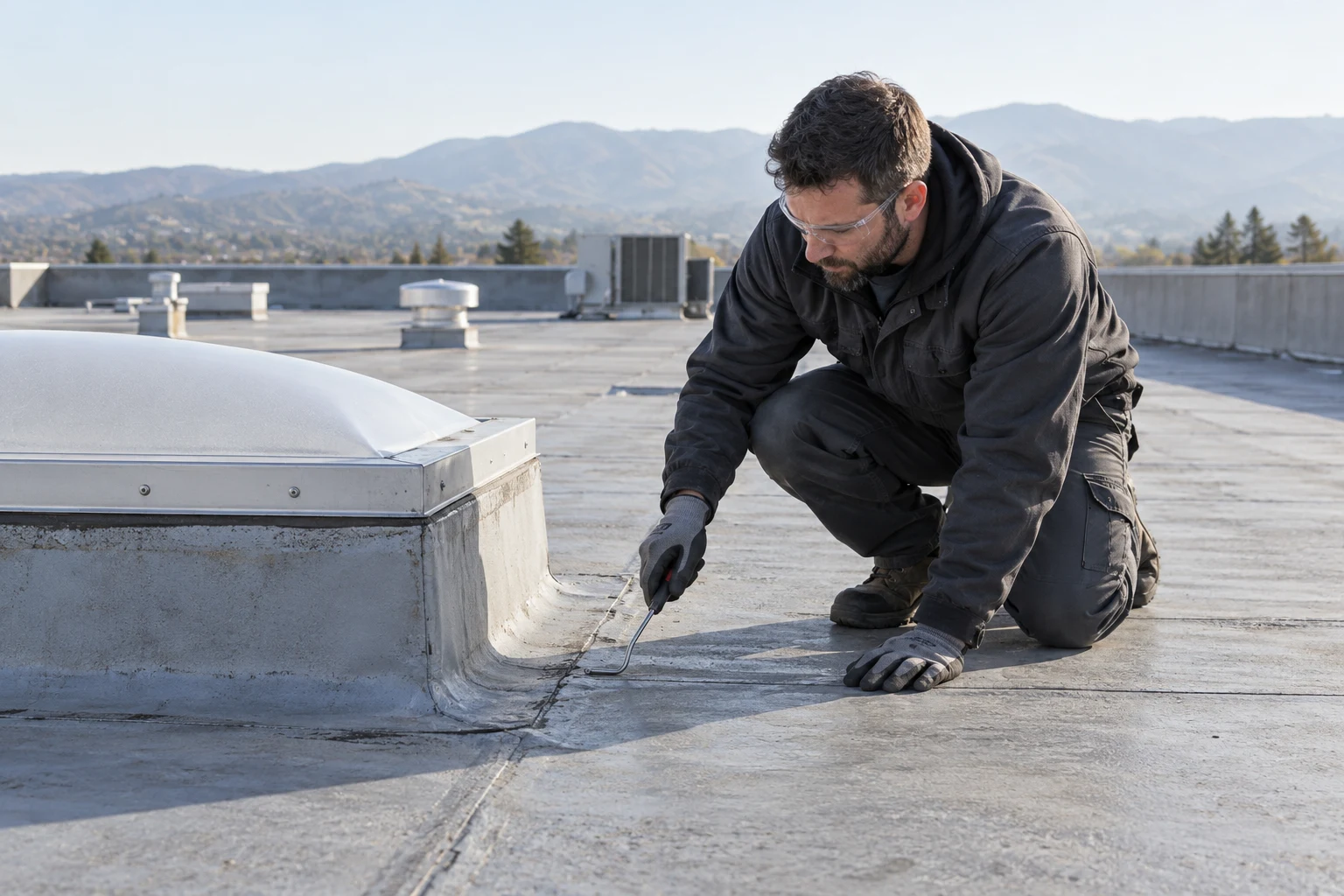
Use The Leak History
Identify the room or roof section involved and when the leak occurs. A problem that appears only under certain conditions may provide a different starting point from one that persists across many events. Earlier repairs and equipment changes are also useful context.
These observations guide the assessment without proving the cause. Water may travel from another roof area or involve a connected building component. The investigation should account for those possibilities.
Examine The Likely Connections
Roof seams, penetrations, walls, edges and drainage points can contribute to water entry. On metal roofs, joints and fasteners may also be relevant. The system determines which details need review and how a repair can be made compatibly.
A visible opening should be considered alongside the surrounding material. Deterioration around it may require more work than a small surface patch suggests.
Separate Entry From Consequences
Stopping water entry is one part of the project. Insulation or other materials affected by the leak may need assessment and treatment. A new patch does not automatically restore those components.
Where failures recur across the roof, the recommendation should explain whether local repair remains practical. The scope needs to identify its limits in relation to the broader roof condition.
Arrange The Review
Provide the building address, affected interior area and roof access contact. Safe observations and existing records are enough to begin. An inspection establishes the material, defect and related work required for a useful repair estimate.